
How to Get Mural Projects: A Complete Guide for Artists
If you are a muralist wondering how to get mural projects consistently, you are not alone. Most mural artists rely on personal connections, occasional referrals, or the hope that someone spots their work on social media. This guide covers the methods that actually work in practice - from social media to specialized platforms - so you can build a more stable and predictable pipeline of projects.
The mural industry is experiencing high demand. Restaurants, hotels, real estate developments, and corporate spaces are commissioning murals to differentiate themselves. However, the supply of qualified artists has also grown. Across the Americas and Europe, hundreds of active muralists compete for the same projects. The difference between those who work consistently and those who go months without commissions is rarely talent - it is acquisition strategy.
What follows is not a sales pitch. It is an editorial guide covering multiple methods, their advantages and drawbacks, so you can choose the ones that fit your situation best.
1. Social media as a discovery portfolio
Instagram and TikTok are the most accessible storefronts for a muralist. A well-edited process video can generate thousands of views and position your work in front of potential clients. Many artists have landed significant commissions thanks to a reel that went viral or a story that someone shared with an architect.
Pros: it is free, you control your brand narrative, and process content (time-lapses, before/after) drives high engagement. Cons: you depend on the algorithm, there is no payment protection, and it requires daily consistency that eats into creative time.
Tips that work: use geotagged hashtags (#muralartNYC, #muralLondon), tag the real location of the mural, post process videos with trending audio, and keep your highlights organized by style. A client who lands on your profile should understand what you do within 5 seconds.
2. Word of mouth and referrals: still the number one channel
Personal recommendation remains the number one source of projects for most muralists. A satisfied client who speaks well of you to their circle is worth more than a thousand Instagram followers. The problem is that many artists treat word of mouth as something passive - they wait for it to happen instead of systematizing it.
How to systematize it: when you finish a project, ask the client to recommend you to contacts (send them a prepared message they can forward). Leave cards or a QR code linking to your portfolio at every completed mural. Offer a discount or benefit for verified referrals. If you already painted a mural at a restaurant, ask whether they know other restaurant owners in the area.
3. Local networking: architects, interior designers, and developers
Big clients - hotels, corporations, residential developments - rarely search for muralists on Instagram. They work with architects, interior designers, or branding agencies who subcontract the mural. If you want access to higher-budget projects, you need to be on the radar of these intermediaries.
Concrete actions: attend industry events (architecture expos, design fairs, gallery openings). Carry a compact physical portfolio or a card with a QR code to your digital portfolio. Reach out to architecture and interior design studios in your city and offer them a brief presentation of your work. Many studios need muralists but do not know where to find them.

Projects in restaurants and hotels typically arrive through architects and interior designers, not social media.
4. Specialized platforms vs. generalist marketplaces
Generalist platforms like Thumbtack or Bark let you offer mural painting services, but they are designed for general services - plumbing, cleaning, repairs. Muralism gets diluted among categories that do not understand the nature of artistic work. Clients who arrive through those channels often have house-painter pricing expectations, not artist pricing expectations.
Platforms specialized in mural art offer specific advantages: portfolios designed to showcase visual work, filters by style and technique, and clients who already understand that a mural is an investment, not an expense. When evaluating any platform, look for: a visual portfolio system, some form of payment protection or escrow, and client pre-qualification before they connect with you.
"The platform is incredibly intuitive, allows us to manage projects quickly and has opened doors to new clients, driving our growth."
5. Direct outreach: the cold email that actually works
Direct outreach has a bad reputation because most people execute it poorly. A generic message saying "I paint murals, here is my Instagram" gets ignored. But a well-targeted email with photos of a project similar to the client's space can open doors that no social media platform opens.
Structure that works: identify businesses with visible, undecorated walls (new restaurants, boutique hotels, coworking spaces). Do a bit of research about the business. Send a short email with 3 elements: a photo of your mural in a similar space, one line about why you believe a mural would benefit their specific space, and a link to your full portfolio.
Do not ask for a meeting in the first email - just spark interest. The goal is for them to reply "tell me more," not to sign a contract. Send between 5 and 10 emails per week to different businesses. Personalized cold email response rates range from 5% to 12% according to industry studies (Woodpecker, 2024), which can generate 1 to 5 conversations per month at that volume.
6. What clients actually look for in your profile
Regardless of the channel through which they discover you, clients evaluate the same things. Understanding what they look for helps you prepare a profile that converts visits into projects.
Portfolio with context
Professional photos of finished murals, ideally with before/after shots and the space in use. A mural in a restaurant full of diners says more than a photo of the mural alone.
Pricing clarity
You do not need to publish exact prices, but you should communicate the variables that affect cost (size, complexity, location). Clients become suspicious when there is no budget reference at all.
Professional communication
Respond quickly, send formal quotes (not voice messages), and explain the process step by step. Clients who pay well expect professional treatment from the first interaction.
Clear contracts and processes
A basic contract defining scope, timeline, payments, and revisions. Serious clients value formality. Those who refuse to sign anything tend to be the most problematic.
7. Mistakes that cost you projects (and money)
Beyond how you land projects, there are recurring mistakes that cause you to lose opportunities or make the projects you do close unprofitable.
- 1Underpricing: lowering your rate to win the project destroys your margin and sets price expectations that are hard to change later. Research what other muralists charge in your area and experience level.
- 2No deposit: starting work without a 30-50% deposit means risking your time and materials. If a client cannot pay a deposit, that is a serious red flag.
- 3Accepting scope creep: "while you are at it, can you add this?" without additional charge is the most common way to lose money on a project that looked profitable. Define the scope in writing before you start.
- 4Inconsistent portfolio: showing 50 murals in completely different styles confuses the client. It is better to show 15 consistent works that demonstrate mastery of a clear style. You can have separate portfolios if you work in multiple styles.
- 5Working without a contract: a verbal agreement protects nobody. Even a simple one-page document with scope, price, timeline, and payment terms can prevent major conflicts.
8. Four lessons for landing projects consistently
Diversify your channels
Do not depend on a single channel. Combine social media, referrals, networking, and platforms. If Instagram stops working tomorrow, you need projects to keep coming in.
Professionalize your process
Contract, deposit, timeline, and clear communication. Clients who pay well look for artists who operate as professionals, not just as creatives.
Invest in your portfolio
Professional photos, process documentation, and an organized portfolio convert better than any marketing campaign. Your work is your best salesperson.
Think long term
Every well-executed project is an investment in future referrals. Every satisfied client can generate 2 or 3 more projects. Treat every mural as your permanent business card.
A path, not a shortcut
Building a stable flow of mural projects does not happen overnight. It requires combining several channels, professionalizing your process, and being consistent. There is no magic method, but there are proven ones.
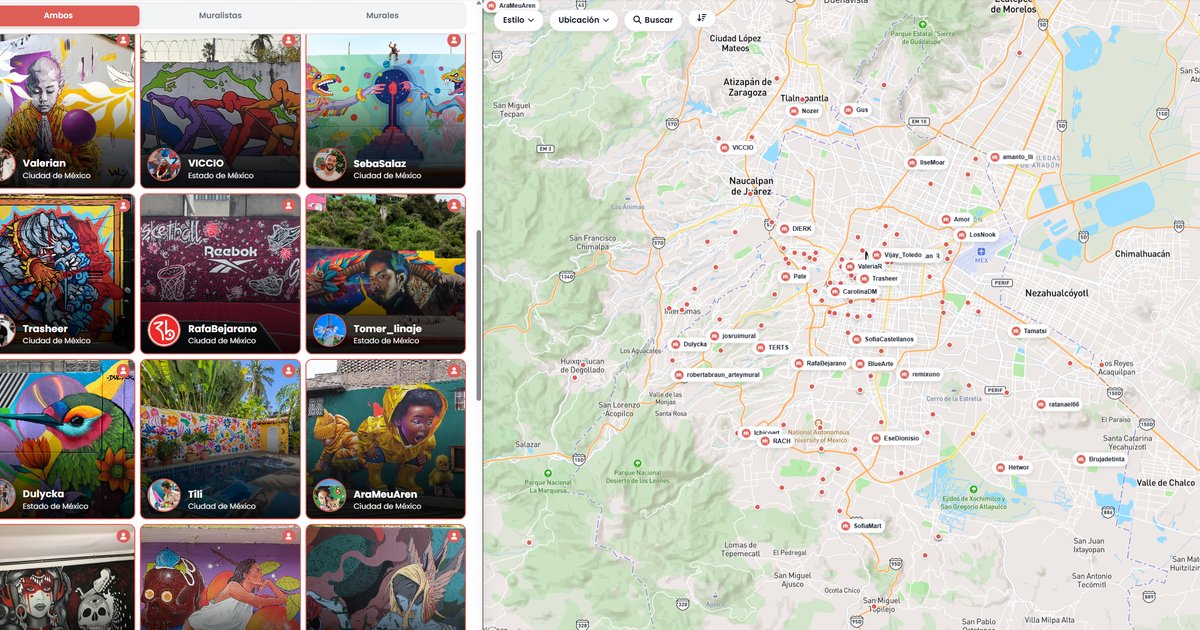
If you are looking for a platform designed specifically for muralists - with visual portfolios, geolocated works, and pre-qualified clients - you can explore Muralia's muralist directory. There are currently more than 250 registered artists across Mexico, Brazil, Guatemala, and Spain, with a presence in over 60 cities. It is not the only path, but it is one that was built with the specific needs of this industry in mind.