

Murals for Restaurants: The Marketing Investment That Works 24/7
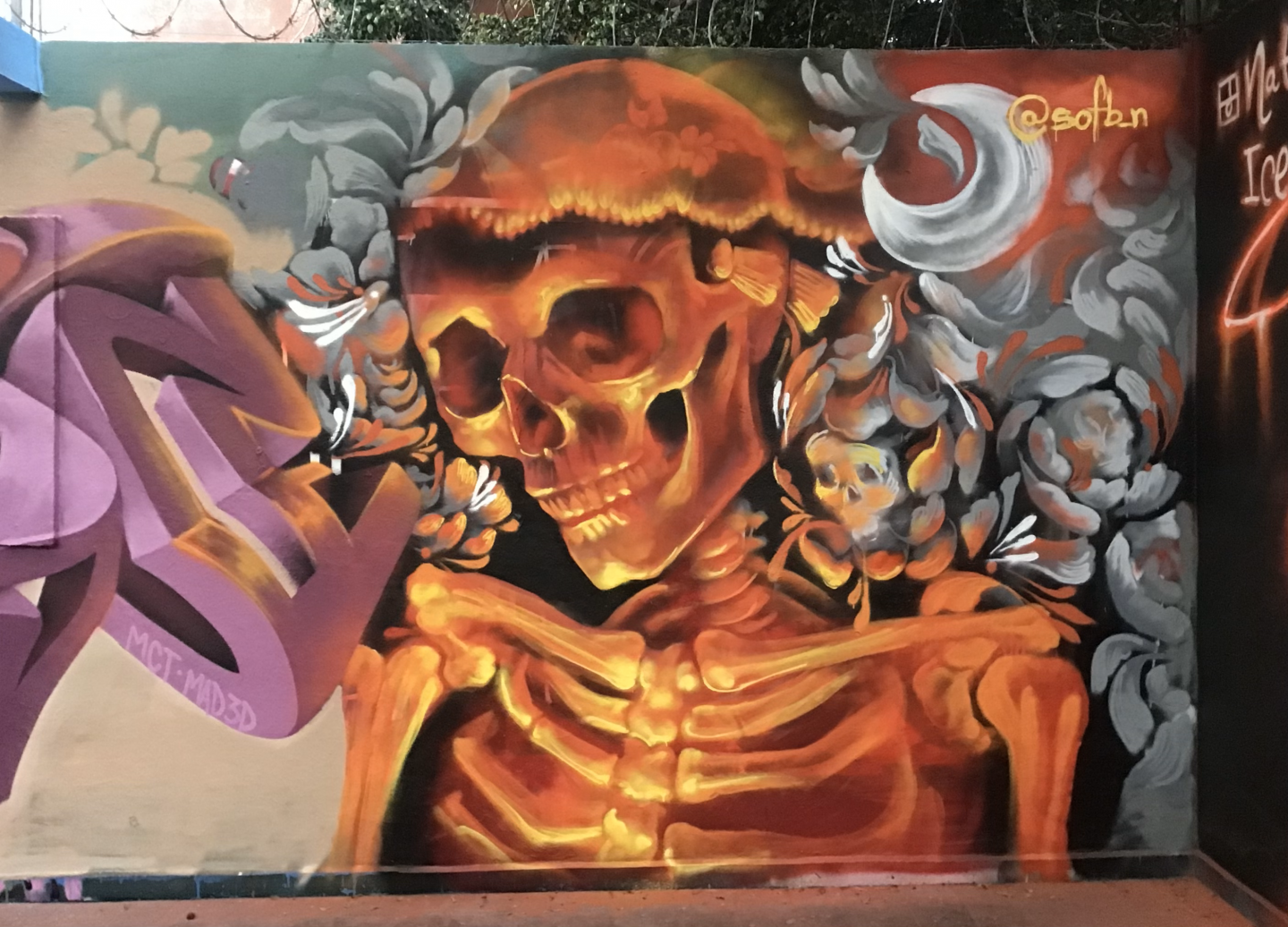
The restaurant industry spends millions on digital advertising that vanishes in 24 hours. Meanwhile, a mural works for your brand every minute of the day, every day of the year, with no cost-per-click and no algorithms limiting its reach. In a market where 75% of consumers choose where to eat based on Instagram, the art on your walls is not decoration - it is marketing infrastructure.
Consider the traditional advertising channels available to restaurants: social media ads, flyers, digital directories, paid influencers. They all share one characteristic: they require recurring investment, and their impact ends the moment you stop paying.
A mural, by contrast, is a fixed asset. A one-time investment that generates returns for years. And in the age of social media, those returns multiply in ways that no other marketing channel can match.
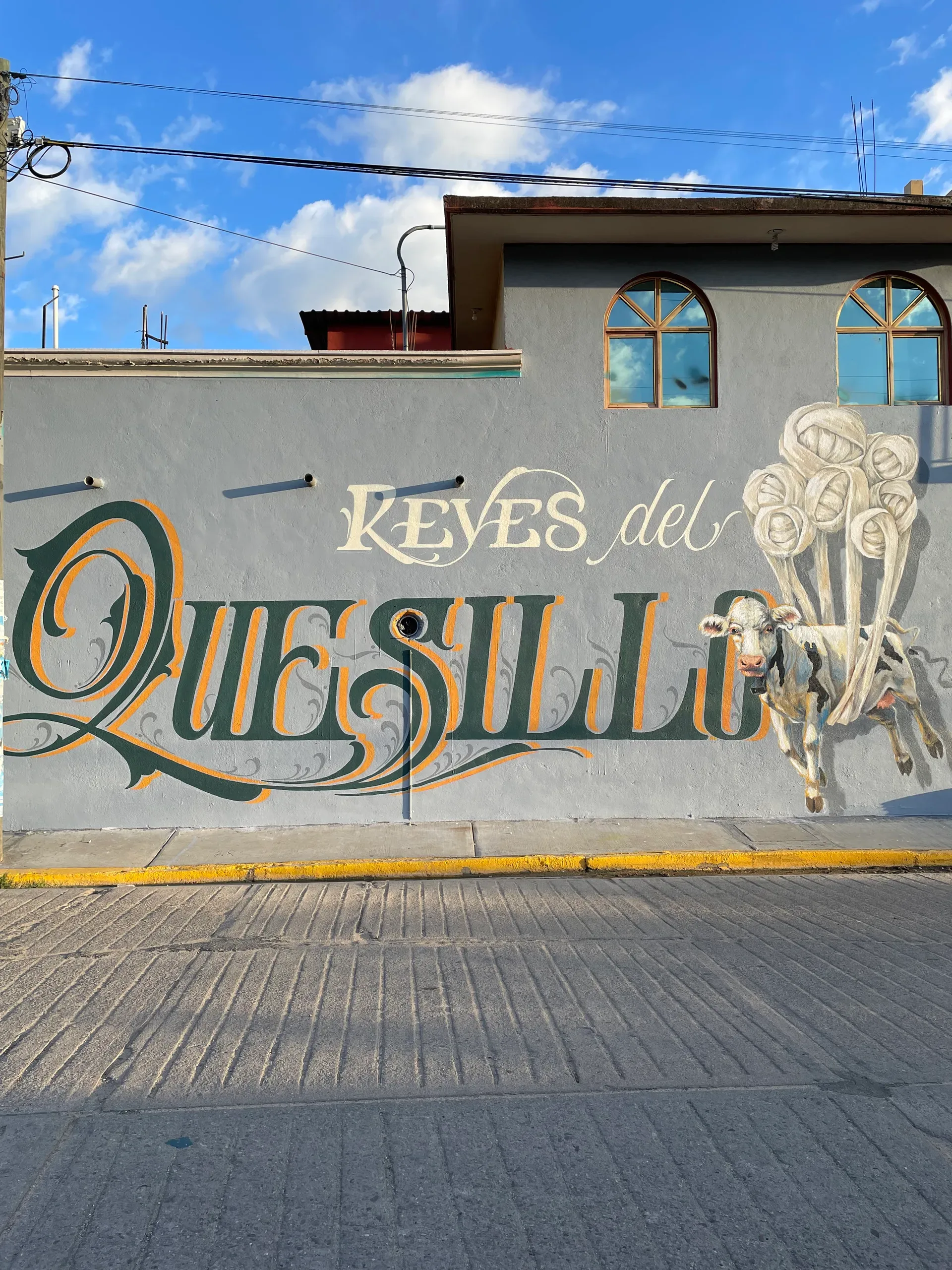
Murals transform anonymous facades into photographable destinations that generate organic content continuously.
The Problem: Ephemeral Advertising in a Saturated Market
According to the National Restaurant Association (2024), the average restaurant allocates between 3% and 6% of gross revenue to marketing. In competitive markets like Mexico City, New York, Bogota, or Madrid, that percentage can be higher. Most of that investment goes to digital channels with increasingly difficult-to-measure returns.
The problem is not just cost. It is impermanence. A sponsored Instagram post has an average lifespan of 48 hours. A story disappears in 24. A flyer ends up in the trash the same day it is handed out. Every month, the restaurant restarts the cycle: produce content, pay for reach, wait for results.
Meanwhile, the restaurant's exterior wall - visible to hundreds or thousands of people who pass by daily - remains blank or bears a generic sign. It is a massive communication channel that most businesses ignore.
The Instagram Effect: Why Murals Generate Measurable ROI
The relationship between murals and digital marketing is not theoretical. The data supports it consistently.
A study by MGH (2019) found that 75% of consumers have chosen a restaurant based on photos they saw on social media. Another study by Zizzi (2017) revealed that 30% of millennials actively avoid restaurants whose Instagram presence is weak or unappealing. These findings are not limited to a single market - the trend replicates across cities from Sao Paulo to Barcelona.
75% choose by photos
Three out of four consumers select restaurants based on visual content from social media, according to MGH (2019).
30% millennials leave
Nearly one-third of millennials avoid restaurants with a weak visual presence on Instagram, according to Zizzi (2017).
UGC at no extra cost
Every customer who takes a selfie in front of your mural and shares it generates organic marketing content without the restaurant spending a cent.
This is where murals become a differentiated marketing channel. A well-executed mural transforms a restaurant's facade or interior into a photographable backdrop. Every customer who stops to take a photo and shares it on their networks generates what marketers call User-Generated Content (UGC) - content created by real users, with more credibility than any paid advertisement.
The mechanics are simple but powerful: the diner arrives, sees the mural, pulls out their phone, takes a photo, uploads it to Instagram or TikTok, tags the location. Each post reaches dozens or hundreds of followers. If the restaurant serves 200 diners daily and only 5% share a photo, that is 10 organic posts per day, 300 per month, 3,600 per year - without any advertising budget.
Murals vs. Traditional Advertising: A Direct Comparison
To understand the value of a mural as an investment, it is worth comparing it to the marketing channels restaurants already use.
Marketing channel comparison
How to Choose the Right Mural Style for Your Restaurant
Not every mural works for every restaurant. The choice of style should be a strategic decision aligned with brand identity, target customer profile, and the type of dining experience offered. Below are the four main categories we observe in restaurants around the world.
Brand identity
Murals that integrate the restaurant's colors, typography, and visual elements. Works well for chains or franchises seeking instant recognition. The mural reinforces what the brand already communicates.
Cultural narrative
Murals that tell the story of the neighborhood, the cuisine's origins, or local culture. Ideal for chef-driven restaurants or gastronomic concepts with regional roots. They create emotional connection.
Instagrammable by design
Murals explicitly designed to function as photo backdrops. Vibrant colors, symmetrical compositions, phrases, or interactive elements. They maximize UGC potential.
Abstract or artistic
Murals that prioritize artistic expression over commercial messaging. They work in fine dining restaurants or minimalist concepts where the piece adds sophistication to the atmosphere.
The decision should not be based solely on personal preference. Analyze who your customer is, what type of content they share on social media, and what kind of atmosphere they expect to find at your restaurant.
ROI Calculation: The Numbers Behind a Mural
One of the most common objections is the upfront cost. To address it, let us run a conservative calculation exercise.
Assume a restaurant with moderate traffic - 150 diners per day - that invests in a facade mural. The numbers are illustrative and vary by market, but the logic applies globally.
Conservative ROI scenario
- 1Initial investment: Variable depending on size, complexity, and artist. On Muralia, the client sets their own budget and receives quotes from artists who fit within it.
- 2Lifespan: A well-executed exterior mural with UV sealant and basic maintenance lasts between 5 and 15 years. An interior mural can last decades.
- 3UGC generated: If only 5% of your daily diners post a photo, that equals ~7 organic posts per day, ~2,500 per year. Each with an average reach of 200 to 500 people.
- 4Estimated impressions: 2,500 posts x 350 people reached (average) = ~875,000 organic impressions per year. At zero cost per impression.
- 5Advertising equivalent: If the average CPM (cost per thousand impressions) on social media is $5-10 USD, those 875,000 impressions would have an equivalent value of $4,375 to $8,750 USD per year in paid advertising - in the first year alone.
These numbers do not include the additional foot traffic that a visible mural generates, nor the increase in average ticket that studies associate with improved environments. They are conservative by design.
Real Cases: Restaurants Using Murals as Strategy
Anecdotal evidence supports the data. Around the world, restaurants of different scales and concepts have integrated murals as a central part of their brand strategy.
Neighborhood restaurants and independent concepts
In cities like Mexico City, Buenos Aires, and Medellin, taquerias, coffee shops, and local eateries have discovered that a facade mural attracts customers who previously walked right past. The effect is especially notable in areas with high gastronomic competition, where visual differentiation can determine whether a pedestrian walks in or keeps going.
The logic is straightforward: on a street with 15 dining options, the restaurant with a striking mural is the one that gets photographed, shared, and recommended. It becomes a geographic reference - "the one with the painted wall" - which reinforces brand recognition organically.
Chains and franchises
Murals are not exclusive to independent concepts. Chains like Starbucks, Shake Shack, and Chipotle have incorporated commissioned murals at strategic locations. The reason is clear: a localized mural gives each location its own identity within the global brand, avoiding the perception that "every location looks the same."
This trend extends to Latin American markets, where local chains and multi-location restaurants seek differentiation without losing brand consistency. A mural incorporating local elements - flora, fauna, neighborhood characters - connects with the community in ways a standard menu cannot.
Fine dining and gastronomic experiences
In the premium segment, murals function as an extension of the gastronomic concept. Chef-driven restaurants in cities like Lima, Barcelona, and New York have commissioned pieces that complement the chef's narrative or culinary concept. Here, the mural does not aim to be "Instagrammable" - it aims to elevate the diner's sensory experience.
Common Mistakes When Commissioning a Restaurant Mural
Not all murals generate the same return. There are frequent mistakes that reduce or eliminate the potential impact of the investment.
- 1Choosing the artist solely on price: The cheapest mural is rarely the most effective. An artist with experience in commercial projects understands how to create compositions that work as photo backdrops, withstand weather, and align with a brand.
- 2Not considering lighting: A mural without proper lighting loses 50% of its impact. If the mural will serve as a nighttime marketing tool (most restaurants operate in the evening), lighting is as important as the paint itself.
- 3Disconnect with the brand: An abstract mural in a family restaurant, or a childish design in a cocktail bar, creates cognitive dissonance. The mural's style must align with the experience diners expect to find.
- 4Ignoring maintenance: An exterior mural without UV sealant will degrade in 2 to 3 years. Investing in quality materials and basic annual maintenance extends its lifespan significantly.
- 5Not integrating the mural into digital strategy: A mural without a suggested hashtag, without geolocation, and without presence on the restaurant's social media loses much of its amplification potential.
Practical tip
Include a custom hashtag or discreet QR code next to the mural. This allows you to track how many people share it and facilitates measurement of real return on investment. Some brands place a small sign inviting guests to tag the restaurant.
The Process: From Idea to Finished Mural
For restaurants that have never commissioned a mural, the process can seem intimidating. In reality, with the right platform, it is simpler than it appears.
- 1Define the objective: Before looking for artists, clarify what you want to achieve. Attract foot traffic, generate content for social media, reinforce your brand identity, or improve the interior experience. The objective determines the type of mural.
- 2Set your budget: On Muralia, the client defines their own budget and the platform shows which artists are available in that range. This eliminates uncertainty and gives you control over the investment.
- 3Receive comparable quotes: Instead of negotiating with a single artist, receive multiple proposals from muralists with verified experience and visible portfolios. Compare styles, prices, and execution timelines. According to Muralia's internal data, the average time to receive the first quote is just 4 hours.
- 4Approve the design before painting: The workflow includes a design proposal phase where the artist presents a digital mockup on the actual photo of your wall. No surprises.
- 5Execution and protected payment: Payment is managed through the platform with an advance and final payment structure. The artist gets paid when the work is finished and approved.
Why It Works at a Global Scale
The restaurant mural trend is not limited to a specific market. It works in Mexico City and in Miami. In Bogota and in Barcelona. In Lima and in Los Angeles. The reason is that it responds to a global shift in consumer behavior: people no longer go to a restaurant just to eat - they go to live an experience, and that experience has to be shareable.
Muralia operates with a network of over 250 artists across 4 countries, allowing restaurants in any market to access professional talent with experience in commercial projects. The platform eliminates geographic barriers: a restaurant in Monterrey can work with a muralist from São Paulo, or a cafe in Madrid can commission an artist from Mexico City.
The lasting competitive advantage
Unlike any other marketing channel, a mural cannot be copied by the competition with a single click. They cannot replicate your location, your design, or the connection that mural creates with your community. It is a unique and irreplicable brand asset.
The Mural as a Business Decision
The conversation about murals in restaurants needs a reframe. It is not about whether you can "afford" a mural. It is about whether you can afford not to have one in a market where visual differentiation determines survival.
Every day your restaurant's wall remains blank is a day of lost impressions, of organic content that was never generated, of potential customers who walked right past.
Digital advertising is necessary, but it is ephemeral. A mural is permanent. It is an investment that works for your restaurant every hour of the day, every day of the year - with no monthly subscription, no algorithms, no ad fatigue.
“In a world where everything is digital and ephemeral, what is painted on a wall endures. And what endures gets shared.
If you are considering a mural for your restaurant, the first step is to define your budget and explore which artists are available. On Muralia, that process takes less than five minutes.