

Murals as Organic Marketing: Why Every Selfie Counts
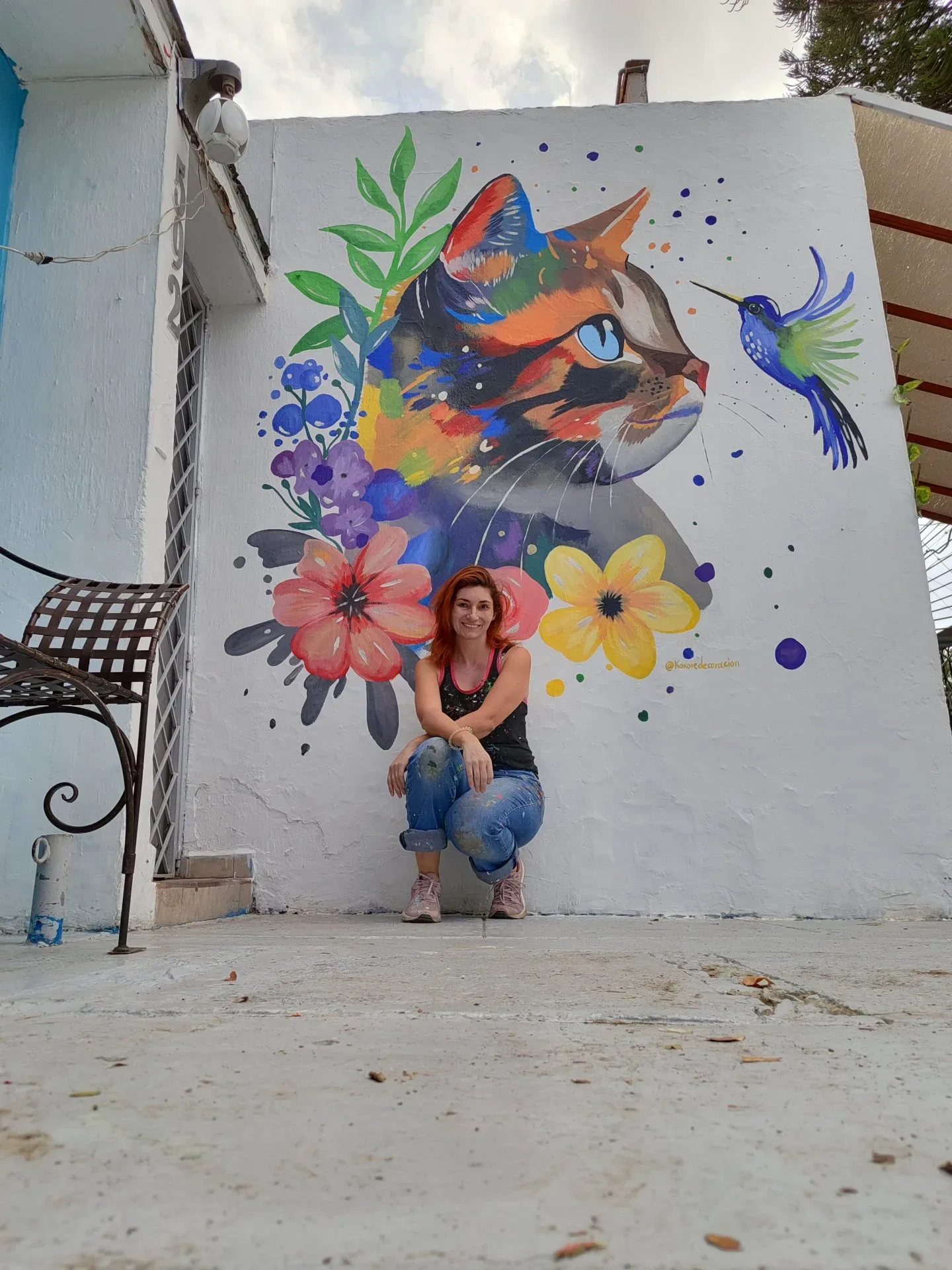
A well-executed mural is not just art on a wall. It is an organic marketing machine that works 24 hours a day, 365 days a year, with no advertising budget. Every person who stops to take a photo, every selfie shared on Instagram or TikTok, every location tag on Google Maps - all of this generates brand exposure at a cost that digital advertising cannot match. This article analyzes the data behind the phenomenon, the mechanisms that make it work, and the design decisions that separate a viral mural from one that goes unnoticed.
Traditional advertising operates on a logic of interruption. It appears between the content the user actually wants to consume. Murals invert that logic entirely: they are the content.
When a visitor pulls out their phone to photograph themselves in front of a mural, they are not watching an ad - they are creating their own content. And when they share it, they become an involuntary brand ambassador for the business or space that houses that piece.
This cycle - visit, photo, post, reach - is what makes murals one of the most underestimated marketing tools on the market today.
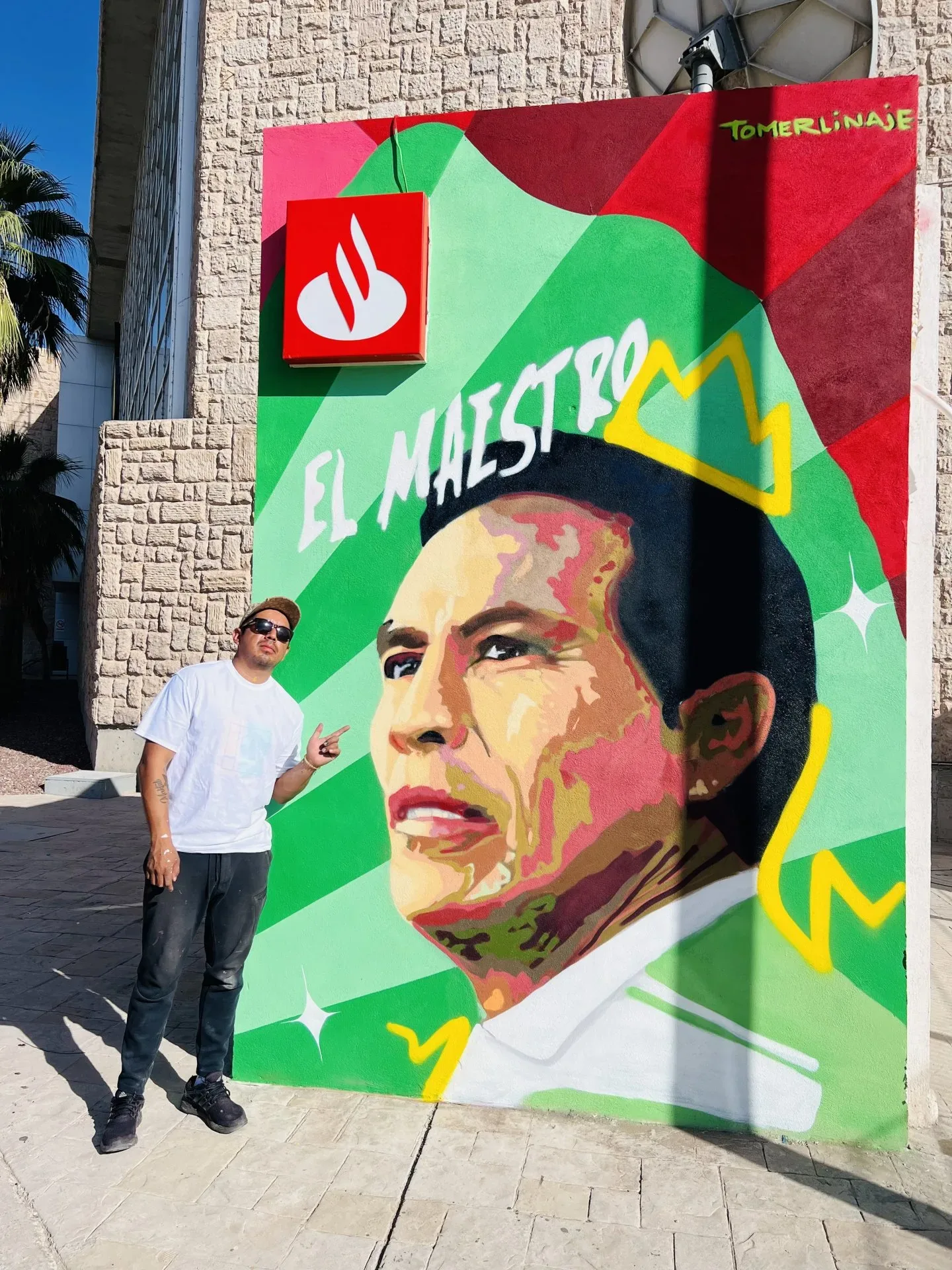
Murals in commercial spaces generate a continuous cycle of organic content: every visitor who stops to photograph multiplies the brand's reach at no additional cost.
The Problem with Digital Advertising
The cost per thousand impressions (CPM) on social media has risen steadily over the past decade. In 2025, the average CPM on Facebook and Instagram ranged between $8 and $12 USD. On TikTok, paid campaigns ran between $6 and $10 USD. Google Display stayed above $4 USD.
These numbers mean that for every thousand people who see an ad - many of them without pausing for more than a second - a company pays between $4 and $12 dollars. Multiply that by the frequency needed to generate brand recognition and budgets accumulate fast.
Now consider the mural. A one-time investment that generates impressions for years. No monthly budget renewal. No algorithms reducing reach. No ad fatigue.
The Effective CPM of a Mural: $0.05
Let us do the math. A medium-sized mural - between 15 and 30 square meters - has a cost that varies by artist, complexity, and location, but it is paid once. From that moment on, every person who photographs and shares it generates free impressions.
A study by Geopath, a firm specializing in out-of-home media measurement, found that artistic installations in high-traffic areas generate between 50,000 and 200,000 visual impressions per month. When you add the digital impressions produced by user-generated content (UGC), the number multiplies.
The result: the effective CPM of a mural can drop to $0.05 USD when amortized over its useful life - between 5 and 10 years with proper maintenance. That is between 160 and 240 times cheaper than paid social media advertising.
Why Algorithms Favor Murals
The algorithms of Instagram and TikTok are not impenetrable black boxes. They follow documented patterns. And several of those patterns directly benefit content that involves murals.
Visual Saturation
Algorithms prioritize content with high color contrast and compositions that stop the scroll. Murals, by definition, meet both criteria. Colorful and visually unique content generates between 2x and 3x more engagement than average posts.
Native Shareability
Content featuring people in front of striking backgrounds has above-average save and share rates. Instagram interprets these signals as quality indicators, amplifying the organic reach of the post.
Geotagging
When users tag the location in their mural photos, they feed the Google Maps profile and Instagram's local discovery algorithm. This turns the mural into an indexed point of interest that attracts future visitors autonomously.
The Effect of Location Tags on Foot Traffic
Google Maps and Yelp have transformed the way people discover local businesses. And photos play a central role in that decision.
According to Google data, businesses with more than 100 photos on their Google Business profile receive 520% more calls and 2,717% more direction requests than those with fewer than 10 photos (this statistic refers to Google Business Profiles in general, not specifically to businesses with murals, but it illustrates the impact of visual content). A photogenic mural dramatically accelerates the accumulation of user-generated photos on these profiles.
The mechanism is direct: a visitor photographs the mural, uploads the image to Google Maps with a review or simply as a photo of the place, and that image appears in search results when another user looks for businesses in the area. On Yelp, the effect is similar - listings with attractive photos receive significantly more clicks than those without visual content.
The mural does not only attract the person walking by on the street. It attracts the person browsing from their phone, deciding where to go.
Case Studies: Murals That Went Viral
The history of mural marketing is full of examples that demonstrate the viral potential of these pieces. They are not anomalies - they are the predictable result of combining quality art, strategic location, and design built for interaction.
Colette Miller's Angel Wings - Los Angeles
Colette Miller's Global Angel Wings project began in 2012 as an artistic intervention in the Arts District of Los Angeles. The premise was simple: angel wings painted on a wall, designed so people could stand in front of them and create the illusion of having their own wings. The result was a global phenomenon. The wings were replicated in cities around the world, generating millions of social media posts and turning each location into a tourist destination in its own right.
What makes this piece work is not artistic complexity - it is participation. The viewer completes the artwork.
The "I Love You So Much" Wall - Austin
On the facade of Jo's Coffee on South Congress Avenue, someone wrote "I love you so much" in cursive letters on a green wall. That was it. No elaborate design, no production budget. Today it is one of the most photographed spots in Austin, Texas, with thousands of location tags per year. The coffee shop became a mandatory stop for tourists, and the line to take a photo extends down the sidewalk on weekends.
The cost of the intervention was minimal. The return in foot traffic and brand recognition has been incalculable.
Wynwood Walls - Miami
Wynwood was a deteriorated industrial neighborhood until Tony Goldman invested in converting its warehouses into canvases for international artists. The project transformed the area into one of the most visited urban art destinations in the world, with an estimated economic impact of hundreds of millions of dollars annually for the zone. Properties appreciated in value, restaurants and galleries multiplied, and the hashtag #wynwoodwalls has accumulated millions of posts.
Wynwood demonstrates that the effect of murals is not limited to a single business - it can redefine an entire neighborhood.
How to Design a "Selfie-Worthy" Mural
Not every mural generates the same level of interaction. The difference between a mural people photograph and one they simply observe while passing by lies in specific design decisions.
Space for the Viewer
The mural should leave a clear area where a person can stand and become part of the composition. Murals that work as selfie backgrounds are those that incorporate this space intentionally - not as a void, but as part of the design. Colette Miller's wings are the canonical example.
High-Contrast Palette
Murals with vibrant colors and high contrast look better on phone cameras, which tend to flatten subtle tones. Saturated palettes with at least one dominant color that stands out from the surroundings ensure the photo looks impactful without additional filters.
Human Scale
A mural that is too large can be impossible to capture in a photo from a normal distance. A mural that is too small does not generate visual impact. The ideal range for photographic interaction is between 3 and 6 meters in height, where a person can capture the full piece with their phone at a comfortable distance.
Subtle Brand Integration
Murals that incorporate brand identity organically - through corporate colors, thematic elements, or recognizable symbols - perform better than those with prominent logos. The goal is for the photo to be shared because it is attractive, not because it looks like an ad.
Measuring Impact: Metrics That Matter
One of the most common objections to mural marketing is the difficulty of measuring its impact. But current tools allow for more precise measurement than many assume.
Measurement Framework for Murals
Hashtag and location tag monitoring
Track posts that mention the mural's location on Instagram, TikTok, and Google Maps. Tools like Brandwatch, Sprout Social, or even manual location searches allow you to quantify the volume of UGC generated.
Google Business Profile analysis
Monitor the increase in photos uploaded to the business profile, direction requests, and calls after mural installation. Google provides these metrics for free.
Foot traffic before and after
Tools like Placer.ai or counting sensors can measure the change in foot traffic. For smaller businesses, a month-over-month sales comparison offers a reasonable proxy.
Effective CPM calculation
Divide the total mural cost by the estimated number of impressions (visual + digital) over its useful life. Compare against the CPM of equivalent digital campaigns to demonstrate return on investment.
The Compound Effect: When a Mural Becomes a Destination
There is an inflection point in a mural's life where it stops being a piece of art and becomes a destination. This compound effect follows a recognizable pattern.
First, local visitors discover it and photograph it. Then, those photos appear in the feeds of friends and followers. Next, travel blogs and local recommendation accounts include it in their lists. Eventually, it appears in travel guides and gets indexed on Google as a point of interest.
This cycle can take weeks or months, but once activated, the mural generates traffic autonomously. It does not require remarketing campaigns, it does not need bid optimization, it does not depend on a monthly budget.
It is marketing that feeds itself.
From Wall to Screen: How to Execute
The difference between a mural that generates return and one that does not lies in planning. It is not enough to paint something eye-catching on a wall. Location, artist, design, and amplification strategy must work together.
Location - The mural should be in an area with natural foot traffic, good daytime lighting, and enough space for people to stop without blocking the way. North-facing facades or those with partial shade are ideal because they avoid glare in photos.
Artist - Work with a professional muralist who understands both technique and commercial intent. An experienced artist knows how to integrate brand identity without compromising artistic quality. At Muralia, we connect businesses with over 250 verified artists across multiple countries, each with a portfolio, documented style, and experience in commercial projects.
Design - Apply the selfie-worthy design principles mentioned above: space for the viewer, high-contrast palette, human scale, and subtle brand integration.
Amplification - Once installed, document the creation process on video (mural timelapses generate high engagement), create a project hashtag, and facilitate interaction by placing subtle signage that invites sharing.
Your Next Mural Could Be Your Best Marketing Investment
At Muralia, we work with over 250 professional muralists across multiple countries to create pieces that do not just transform spaces - they turn them into organic marketing engines. From concept to execution, every project is designed to generate visual impact and measurable return.
Get a quote for your mural