

Murals in Retail: How Art Transforms the Shopping Experience
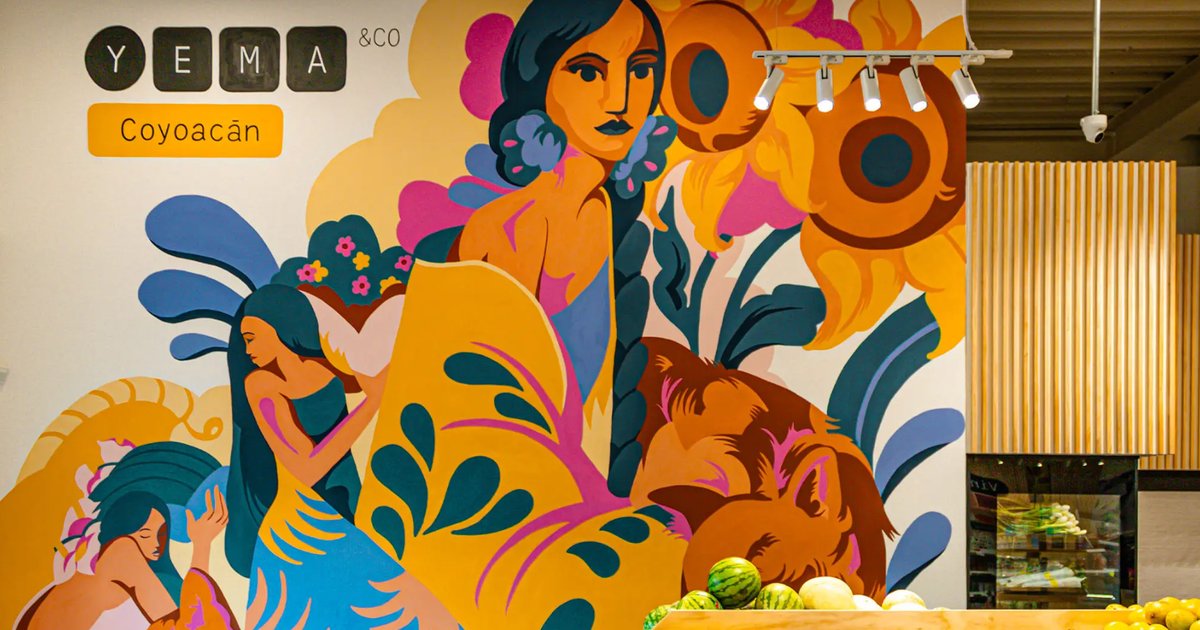
Shopping centers face a paradox: as e-commerce grows, physical spaces need to offer something a screen cannot replicate. The answer, according to research from the International Council of Shopping Centers (ICSC) and the practice of operators across multiple markets, involves turning the act of shopping into a sensory experience. Murals are one of the most effective tools for achieving this.
There are stores where you walk in, buy something, and walk out. And there are spaces where you want to stay. The difference is rarely about the product. It is about how the place makes you feel.
Over the past decade, a trend has gained momentum among retail operators, real estate developers, and independent business owners in cities around the world: integrating murals and street art as a structural part of the shopping experience. Not as accessory decoration, but as brand infrastructure, wayfinding systems, and organic marketing engines.
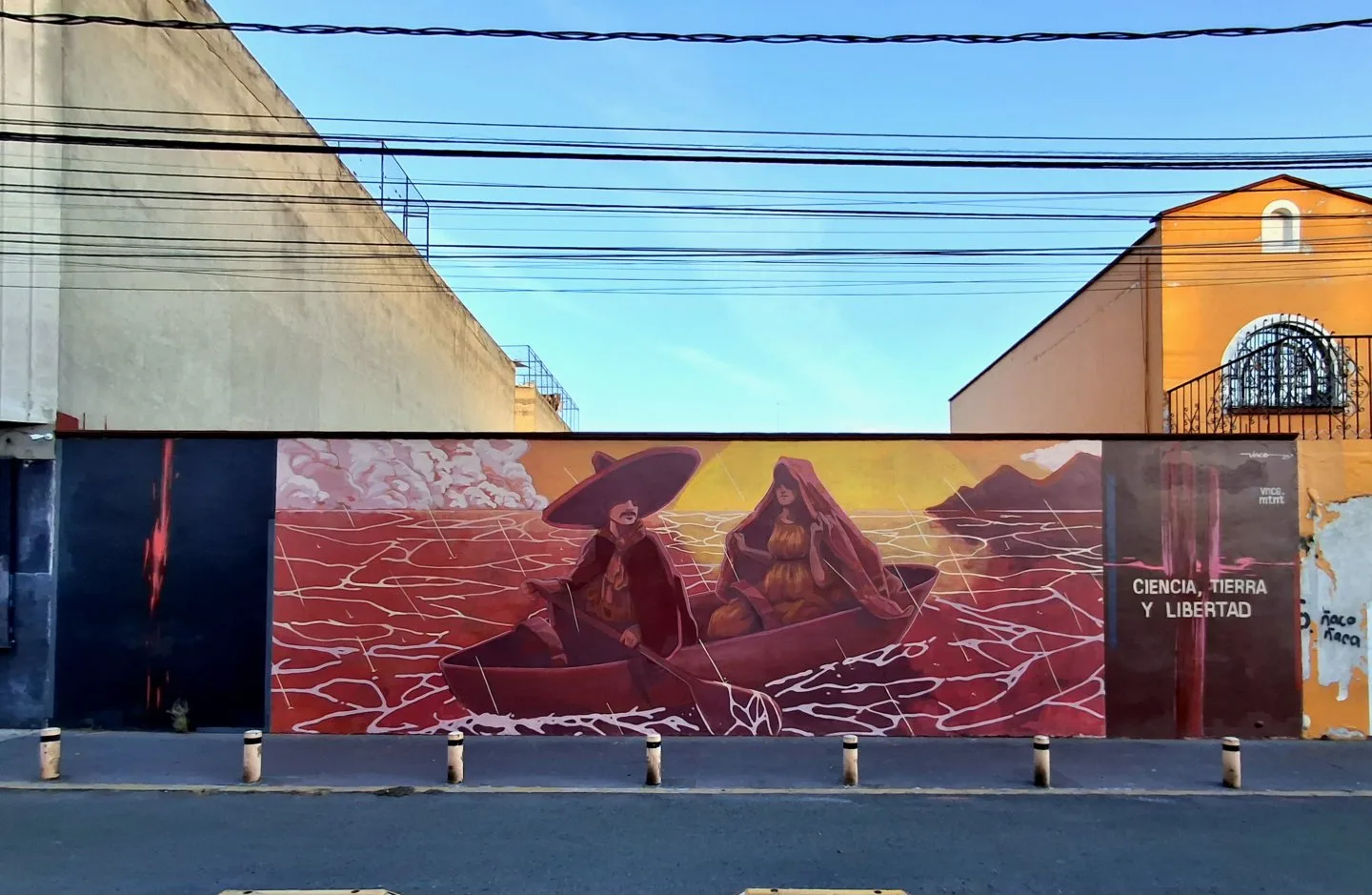
A high-impact mural transforms the facade of a commercial space, attracting attention and building visual identity. Muralist: Vince
Dwell Time and Sales: What the Research Shows
The concept of dwell time - the amount of time a visitor spends inside a commercial space - is one of the most studied metrics in the retail industry. The logic is straightforward: the longer a customer stays, the higher the probability they will purchase, and the larger their average transaction tends to be.
Research from the ICSC has explored this correlation. A study frequently cited in the industry (2007 - while the specific percentages may have shifted, the directional relationship has been supported by subsequent retail research) suggests that even a 1% increase in dwell time can be associated with an approximate 1.3% increase in sales. The relationship is not perfectly linear or universal, but the trend is consistent: spaces that manage to retain visitors tend to generate more revenue.
The operational question is: what makes someone stay longer in a place? Researchers point to several factors - comfort, variety, services - but one that has gained relevance in recent years is the quality of the visual environment. And that is where murals enter the equation.
Placemaking: Art as Experience Architecture
The term placemaking - creating a sense of place - has become standard vocabulary among developers and shopping center operators. The idea is that a commercial space does not compete only with other shopping centers; it competes with any activity the consumer might choose during their free time. Netflix, a park, dinner at home. Physical retail needs to offer something that justifies the trip.
Murals contribute to placemaking in concrete ways. They create internal reference points that aid navigation. They generate zones with distinct personalities within a single space. And, perhaps most relevant for operators, they transform low-traffic areas into destinations within the shopping center itself.
Emotional Wayfinding
Murals function as visual landmarks. Instead of relying solely on conventional signage, visitors remember zones by their art: “meet me by the garden mural.” This emotional orientation facilitates navigation and creates memorability.
Visit Retention
Art creates pauses in the journey. Each mural is a reason to stop, look, and comment. Those micro-pauses accumulate additional minutes of dwell time that translate into greater exposure to stores and a higher probability of purchase.
Organic Marketing
Every photogenic mural generates content shared by visitors themselves. It is authentic exposure: unpaid, unsolicited, in the format that generates the most trust among consumers - peer recommendation.
The Instagram Effect: “Photographable” Retail Destinations
In the attention economy, a commercial space that generates social media content has a measurable competitive advantage. Shopping centers and stores that incorporate murals become destinations, not just points of sale.
The mechanism is well understood: a visitor takes a photo in front of a mural. They share it on Instagram, TikTok, or WhatsApp. Their contacts - potential customers - see the location. Some decide to visit. The cycle repeats. This phenomenon is not exclusive to large chains; it works equally well for neighborhood shops, local restaurants, and independent markets in any city.
What matters for the operator is that this marketing carries no additional cost after the initial investment. A well-executed mural can generate organic content for years. Unlike an advertising campaign with an expiration date, the mural keeps working as long as it is on the wall.
Local Identity: The Mural as a Cultural Anchor
One of the risks of contemporary retail is homogenization. The same brands, the same interior designs, the same experience in any city in the world. The result is that commercial spaces become interchangeable - and dispensable.
Murals offer a direct solution to this problem. By commissioning art that reflects the history, culture, or identity of the community where the business operates, the space stops being generic and becomes a place that belongs to its surroundings.
This principle applies equally to a supermarket chain that wants to differentiate its locations and to an independent boutique seeking to connect with its neighborhood. In both cases, the mural communicates: “this space is from here.”
Reference Case: Cielo Abierto and YEMA Coyoacan
A documented example of this strategy is Cielo Abierto Coyoacan, a shopping plaza in Mexico City that integrates murals and street art as a central part of its identity. Inside the plaza operates YEMA Coyoacan, a supermarket that applied the same logic to its interior store design, featuring murals by artist Maga Rey that connect the neighborhood's pre-Hispanic history with the shopping experience.
The result is a space that neighbors identify as “the supermarket with the beautiful mural” - a physical proof of its brand promise. While a conventional grocery store is interchangeable, YEMA became a place with its own identity. The plaza's murals, created by artists such as Stom500 and Reko Rises, include interactive elements that visitors photographed and shared spontaneously.
We documented this case in detail in our article Street Art in Retail: Cielo Abierto and YEMA Coyoacan, which analyzes the specific functions of art in this context: emotional wayfinding, visit retention, and organic content generation.
Competitive Differentiation: Why Art Matters More Than Ever
Retail faces unprecedented competitive pressure. E-commerce captures a growing share of consumer spending. Shopping centers compete with each other for foot traffic that, in many markets, has declined compared to pre-pandemic levels.
In this context, differentiation is not a luxury - it is an operational necessity. And murals offer a form of differentiation that is difficult to replicate. Unlike a complete architectural renovation, a mural program can be implemented in weeks, not years. Unlike a digital marketing campaign, murals create a permanent physical asset. And unlike a promotional discount, they do not erode margins.
For Shopping Centers
A mural program can revitalize low-traffic areas, create walking routes that distribute visitors more evenly, and position the plaza as a cultural destination - not just a consumption center. Plazas in cities across Europe, the Americas, and Asia have adopted this approach with documented results.
For Independent Stores
A mural on the facade or interior works as a permanent advertisement with personality. It distinguishes your business from neighbors, sparks curiosity in passersby, and creates a neighborhood landmark. It is the physical equivalent of having a memorable brand.
Outdoor vs. Indoor: Where to Place the Art
The decision between outdoor and indoor murals is not binary - many projects combine both. But each location serves different functions.
Outdoor Murals
- Primary function: Attraction. They capture the attention of people passing by and generate curiosity.
- Reach: Larger audience - any pedestrian or driver can see them.
- Marketing: High social media visibility since they are accessible without entering.
- Considerations: Require weather-resistant materials and periodic maintenance.
Indoor Murals
- Primary function: Retention. They enrich the experience of those already inside the space.
- Reach: Captive audience - visitors who have already decided to enter.
- Marketing: Generate more intimate and detailed content, frequently associated with the brand.
- Considerations: Better protected from weather, but require coordination with space operations during execution.
The most effective strategy typically combines both: an outdoor mural that attracts, and indoor art that retains and deepens the experience. This “attract and retain” framework replicates the classic conversion funnel logic, but applied to physical space.
Global Perspective: Art in Retail Is Not a Trend - It Is a Standard
This practice is not limited to any specific market. Cities such as Melbourne, Sao Paulo, London, Los Angeles, Bogota, Berlin, Mexico City, and Tokyo have seen how street art in commercial spaces has become an expected element, not an exceptional one.
In Australia, Melbourne's intervened alleyways (like Hosier Lane) generated an entire commercial ecosystem around them. In the United States, projects like Wynwood Walls in Miami transformed a warehouse district into one of the city's most visited tourist destinations - and with it, boosted real estate values and commercial traffic across the entire area.
The lesson for retail operators in any country is clear: consumers expect spaces with personality. Mural art is one of the most direct ways to deliver it.
How to Start: From Idea to Wall
Executing a mural project in a commercial space requires more than choosing a design. It involves defining a brief that is coherent with the brand, selecting an artist whose visual language aligns with the business objectives, coordinating execution logistics without disrupting operations, and planning long-term maintenance.
Platforms like Muralia professionalize this process, connecting businesses with verified artists across multiple countries and managing the project from start to finish. From quoting to delivery, the process is designed so that retail operators can focus on their business while the art comes to life on their walls.