

How Public Art Increases Commercial Property Value
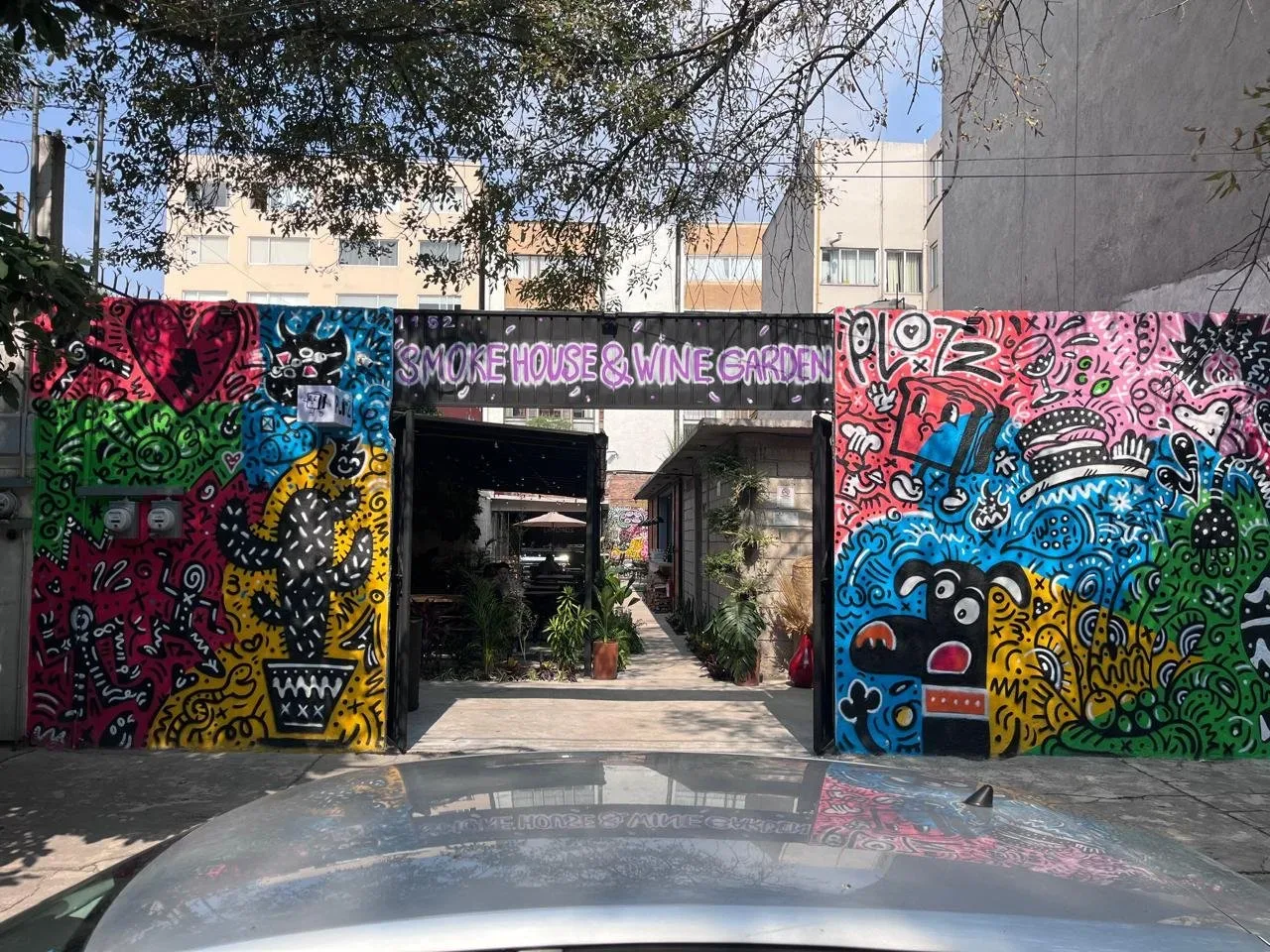
The relationship between public art and property value is no longer anecdotal. Market studies across the United States, Europe, and Latin America document that large-format murals generate a 3 to 8% rent premium, accelerate leasing velocity, and produce organic content with an effective CPM of $0.05 - a fraction of the cost of conventional digital advertising. This article breaks down the financial mechanisms, the property types with the highest return potential, and a practical framework for measuring the ROI of artistic interventions on commercial assets.
For decades, art in commercial properties was treated as a discretionary expense - nice to have, but hard to justify in an investment committee. That narrative is changing. As developers compete for differentiation in saturated markets, public art - particularly large-format murals - has emerged as a measurable value-creation tool.
The question is no longer whether public art adds value to a property. The question is how much, under what conditions, and how to capture it systematically.
Large-format murals on commercial properties function as permanent marketing assets and market differentiators.
The 4 Value-Creation Mechanisms
The financial impact of a mural on a commercial property does not operate through a single channel. Available data suggests at least four distinct mechanisms, each with its own economic logic and measurement metric.
1. Rent Premium
Properties with murals document rent premiums of 3 to 8% over comparable properties without artistic intervention. In markets like Wynwood (Miami), RiNo (Denver), and Bushwick (Brooklyn), the differential has reached double digits in certain corridors. The mechanism is direct: art improves neighborhood perception, attracts tenants willing to pay more, and reduces price sensitivity.
2. Leasing Velocity
A vacant space with a mural is more photogenic than a vacant space without one. This translates into better listings, more showings, and shorter leasing cycles. Developers in Austin and Mexico City report reductions of 15 to 30 days in vacancy time when they incorporate art into facades during the pre-leasing phase.
3. Social Media Value
A well-executed mural generates organic content continuously. Visitors, tenants, and passersby photograph and share it at no cost to the property owner. If a mural generates 1 million impressions per year on social media, the effective CPM is approximately $0.05 - compared to $8 to $12 per CPM on paid Instagram or TikTok advertising. It is exposure without recurring additional cost.
4. Asset Value
The most significant effect operates at the valuation level. If a $60,000 mural generates a net annual increase of $108,000 in NOI (net operating income) through rent premiums and vacancy reduction, that translates to $1.96 million in additional asset value at a 5.5% capitalization rate. A 32x return on the initial investment.
The 32x Model: Financial Breakdown
The 32x return calculation deserves a detailed analysis, because it is the argument that convinces investment committees. The model works as follows:
Return Model - Multifamily Property Example
- 1Mural investment: $60,000 (large-format mural on the main facade, including design, materials, and UV protection)
- 2Rent premium: 5% on a base income of $1.8M per year = $90,000 additional annually
- 3Vacancy reduction: From 6% to 5% = $18,000 additional in occupancy
- 4NOI increase: $108,000 annually ($90K rent + $18K vacancy)
- 5Asset value: $108,000 / 0.055 (cap rate) = $1,963,636 in additional value
- 6Return: $1.96M / $60K = 32.7x on the initial investment
Note: This model assumes the mural is well maintained and that the local market has sufficient demand to absorb the premium. Results vary significantly by location, property type, and quality of the artistic intervention. Annual maintenance ($2,000 to $5,000 for exteriors) must be included in cost projections.
Case Study: Wynwood, Miami
Wynwood is probably the most documented case of public art transforming the real estate value of an entire district. Before 2009, it was a deteriorated industrial neighborhood north of downtown Miami. Rents were low and vacancy was high.
The intervention of Wynwood Walls - a project that invited world-class artists to paint murals on the area's abandoned warehouses - changed the neighborhood's trajectory. The post-intervention data is compelling:
- ✓Price per square foot: Commercial rents went from $15-20/sq ft to over $60/sq ft in the decade following the artistic intervention, according to CBRE data and local brokers.
- ✓Foot traffic: The district went from an area most Miami residents avoided to receiving over 3 million annual visitors, according to the Wynwood Business Improvement District.
- ✓Development: Over $2 billion in new residential and commercial projects have been approved in the area since 2015, attracted in part by the cultural identity that murals created.
- ✓Tourism multiplier: Wynwood murals appear in over 500,000 Instagram posts, generating organic exposure equivalent to millions of dollars in traditional advertising.
It is important to note that Wynwood is not an isolated case. Similar patterns - though at a smaller scale - are observed in districts like RiNo in Denver, Bushwick in Brooklyn, Shoreditch in London, and Roma Norte in Mexico City. In each case, the concentration of public art preceded or accelerated the commercial revitalization of the area.
The pattern is not automatic. Wynwood worked because it combined high-quality art with supporting infrastructure (restaurants, galleries, transportation) and a deliberate placemaking strategy. An isolated mural in an area with no other attractions does not replicate these results. But a well-placed mural on a property with potential can capture a significant portion of this effect.
Property Types with the Highest Return Potential
Not all commercial properties benefit equally from an artistic intervention. Available data suggests that certain asset types capture more value than others.
Multifamily
The segment with the most documented ROI. Young residents (25-40) value their building's visual identity as part of their lifestyle. In markets like Austin, Los Angeles, and Guadalajara, complexes with murals in common areas or facades report lease renewal rates 8 to 12 percentage points higher than comparable properties without art. This reduces turnover costs - which can reach $3,000 to $5,000 per unit - and stabilizes income flow.
Retail & Mixed-Use
Shopping centers and mixed-use developments benefit from the destination effect: a mural turns a conventional shopping center into a photographable point of interest. A study by the International Council of Shopping Centers (ICSC, 2007 - while the specific percentages may have shifted, the directional relationship between visual environment and dwell time has been supported by subsequent research) documented that shopping centers with art activations report a 15 to 25% increase in dwell time, correlated with higher average spend per visit. Art acts as an emotional anchor.
Hospitality
Boutique hotels and hostels with murals generate high-value organic content. A mural in a hotel lobby or facade appears in guest photos, Google reviews, and social media posts, creating a marketing cycle with no recurring cost. Properties like The LINE Hotel in Los Angeles have documented that art is the second most cited reason in positive reviews, after location.
Effective CPM: Art vs. Digital Advertising
One of the most compelling arguments for property owners is the direct comparison between the cost of a mural and the cost of conventional digital advertising. The numbers tell a clear story:
Cost per Thousand Impressions (CPM) Comparison
- ✓Paid Instagram/Facebook advertising: $8 to $12 per CPM, with diminishing returns and continuous budget dependency
- ✓Outdoor advertising (billboards): $3 to $8 per CPM, with monthly contracts and no shareable content generation
- ✓Mural (first year): Approximately $0.05 per CPM, assuming a $50,000 investment and 1 million organic annual impressions between foot traffic and social media
- ✓Mural (years 2-5): CPM drops to $0.005 or less, since the initial investment is amortized and only maintenance costs of $2,000 to $5,000 annually remain
The fundamental difference: digital advertising stops working when you stop paying. A mural continues generating impressions for 5 to 10 years with adequate maintenance. It is an asset, not a recurring expense.
Measurement Framework: How to Quantify ROI
For public art investment to be defensible before a board of directors, it needs a rigorous measurement framework. These are the key indicators every property owner should track:
- 1Rent per square foot/meter (before vs. after): Compare effective rents before and after mural installation, controlling for general market trends. Use at least 3 comparable properties as a control group.
- 2Vacancy rate and leasing velocity: Measure average days between unit vacancy and new contract signing. A well-placed mural should reduce this period measurably within the first 6 months.
- 3Organic social media impressions: Track geolocated mentions, property-associated hashtags, and user-generated content (UGC) volume. Tools like Brandwatch or even manual Instagram searches provide sufficient data.
- 4Foot traffic: Counting sensors or mobile phone data (such as Placer.ai or Datawifi) allow you to measure the increase in visitors after installation.
- 5Lease renewal rate: For multifamily, measure whether tenants living in buildings with murals renew at rates above the portfolio average.
- 6Asset valuation: At the next appraisal, verify whether the appraiser recognizes art as a differentiating factor that justifies a more favorable cap rate or higher NOI.
Recommendation: Establish the Baseline Before Painting
The most common mistake is failing to document the prior state. Before starting any artistic intervention, record current metrics for rent, vacancy, traffic, and social media mentions. Without a baseline, it is impossible to demonstrate the mural's impact in a refinancing or sale negotiation. The best results come when art is incorporated from the development phase, not as an afterthought.
Real Costs: Initial Investment and Maintenance
Transparency in costs is fundamental for an informed decision. These are the actual market ranges for murals on commercial properties:
Cost Structure
Initial investment - Varies by scale, design complexity, surface type, and artist track record. A large-format mural for a commercial property typically falls between $15,000 and $80,000. Projects of monumental scale or with internationally recognized artists can exceed $100,000. On Muralia, with over 250 artists in the global network, property owners can receive competitive quotes from professional muralists with verified experience.
Annual maintenance (exteriors) - Between $2,000 and $5,000, depending on exposure to weather elements. Includes cleaning, retouching worn areas, and reapplication of UV sealant. A well-maintained mural can last 7 to 15 years. Without maintenance, visible degradation begins between years 3 and 5.
Maintenance (interiors) - Significantly lower, between $500 and $1,500 annually. Interior murals are protected from sun exposure and rain, so their useful life is considerably longer.
Global Perspective: Beyond Miami
The phenomenon of public art and real estate appreciation is not exclusive to the U.S. market. Globally, there are consistent patterns that validate the investment thesis:
In Mexico City, neighborhoods like Roma, Condesa, and Juarez have seen a growing concentration of murals in mixed-use developments, coinciding with rent increases above the city average. The Regina Street corridor in the Historic Center is an early example of how public art contributed to the commercial reactivation of a degraded area.
In Bogota, the La Candelaria district uses muralism as part of its tourism strategy, and businesses located on street art tour routes report sales increases of 20 to 35% during peak seasons.
In Lisbon, the municipal urban art program transformed neighborhoods like Mouraria and Graca, which went from low-profile residential areas to tourist corridors with commercial rents that have tripled in a decade.
In Melbourne, the famous laneways with street art are an integral part of the city brand and have been recognized by the local government as economic assets generating over $3 billion AUD annually in tourism activity.
Critical Success Factors
Not every artistic intervention generates value. Failed cases share predictable patterns, as do successful ones. These are the variables that determine whether a mural creates value or is simply an expense:
Location and Visibility
A mural on a side wall with no foot traffic generates a fraction of the value of one on a main facade along a busy avenue. Street visibility, nearby parking, and accessibility for photographing are factors that multiply impact. Corner murals are particularly effective because they are visible from multiple angles.
Artistic Quality
Not just any mural generates the desired effect. Execution quality, concept originality, and coherence with the architectural context are determining factors. A mediocre mural can have the opposite effect: communicating neglect or lack of judgment. Working with professional artists with verified portfolios significantly reduces this risk.
Maintenance Plan
A deteriorating mural communicates abandonment, not culture. The maintenance budget ($2,000 to $5,000 annually for exteriors) must be committed before installation. Including a touch-up clause in the contract with the original artist is a recommended practice that ensures long-term visual coherence.
Alignment with Asset Identity
The mural must complement - not contradict - the development's positioning. A corporate office building requires a different intervention than a residential complex for young professionals. Art curation informed by the leasing strategy is what separates a smart investment from an expensive decoration.
How to Get Started: From Decision to Execution
For developers and property managers who want to explore this strategy, the process is simplified when working with a specialized platform. On Muralia, with a network of over 250 professional artists in 4 countries, the process is structured as follows:
- 1Define the brief: Available surface area, budget, desired style, and business objectives. A good brief is the difference between a mural that generates value and one that simply decorates.
- 2Receive competitive quotes: Multiple artists with verified experience submit proposals, allowing you to compare creative approaches and price ranges.
- 3Approve the design: Revisions and adjustments before the first brushstroke is applied. The property owner maintains control over the creative direction.
- 4Professional execution: Protected payments, coverage insurance, and quality guarantee through the platform.
- 5Document and measure: Establish tracking metrics to quantify the return on investment in the following months.
Public Art as Infrastructure, Not Decoration
The available evidence points in a clear direction: public art on commercial properties is not an aesthetic luxury but an infrastructure investment with quantifiable returns. Developers who integrate murals from the planning phase capture more value than those who add it as a late afterthought. In a market where differentiation is increasingly difficult - and increasingly valuable - art offers a measurable competitive advantage.