

The ROI of Murals: Data That Convinces Any Investor
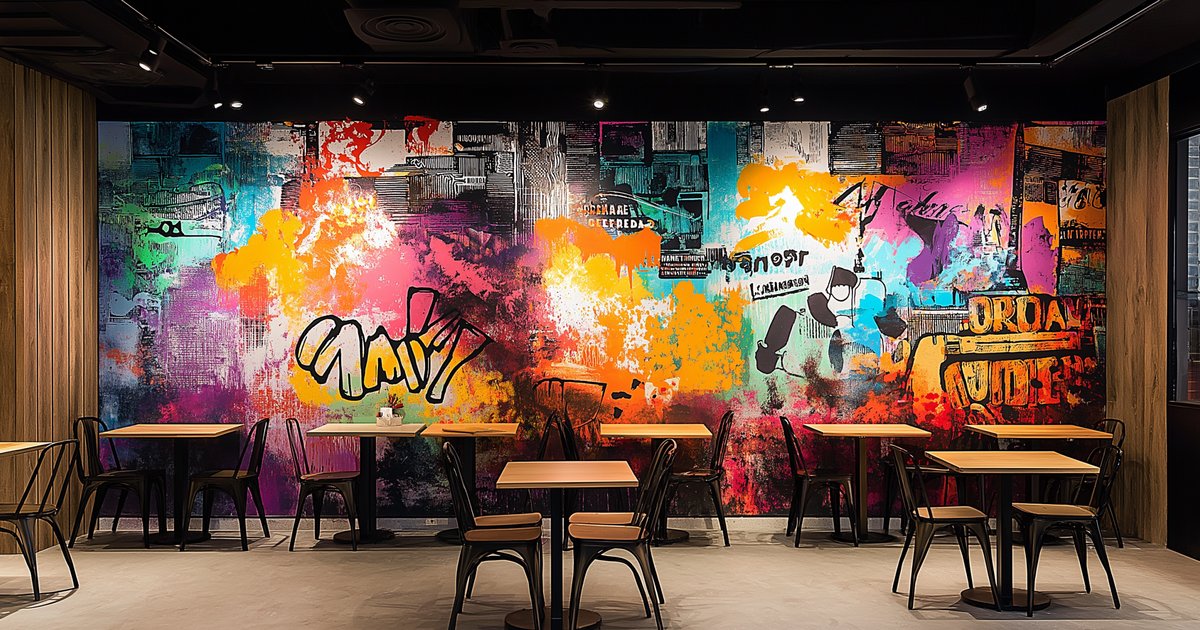
A mural is not an expense. It is an investment with measurable returns across rent premiums, asset value, organic marketing and leasing velocity. This article presents the data, the sources and the measurement framework you need to justify a mural project before any investment committee.
Public art has moved beyond purely aesthetic decisions. As developers, real estate investment funds and retail operators seek differentiation in saturated markets, murals have emerged as a tool with documented financial impact.
The problem until now has been the lack of consolidated data. The studies exist, but they are scattered across urbanism publications, public art industry reports and commercial real estate cap rate analyses. This article brings that evidence together in one place.

Large-format murals generate daily organic impressions at a cost per impression that compares favorably against digital advertising.
The Four Vectors of Mural ROI
The return on a mural cannot be measured with a single metric. It operates across four simultaneous vectors, each with its own time horizon and measurement method.
1. Rent Premium
Properties with artistic interventions report rent premiums of 3% to 8% over comparable units without art, according to Urban Land Institute (ULI) analyses. In established creative districts, this differential can exceed 12%.
2. Leasing Velocity
Spaces with differentiated visual identity reduce their vacancy periods. A mural transforms an empty storefront into a landmark, attracting foot traffic even before a lease is signed.
3. Organic Impressions
A mural on a street with moderate traffic generates between 5,000 and 50,000 daily impressions at an effective CPM of $0.05 or less. By comparison, the average CPM for paid digital advertising ranges from $8 to $12 (Meta Ads, Google Display).
4. Asset Value Uplift
The value of a commercial property is calculated from its Net Operating Income (NOI). If a mural increases rents and reduces vacancy, NOI rises - and with it, the valuation of the entire asset at the market capitalization rate.
Case Study: Wynwood, Miami
Miami's Wynwood district is the most documented case of urban transformation driven by murals. What in 2009 was an industrial neighborhood with empty warehouses became, in less than a decade, one of the highest-value commercial districts per square foot in South Florida.
Consider a representative building on the main corridor:
Simulation: Commercial Building in Wynwood
Mural investment
$60,000 USD
Commercial area
3,000 sq ft
Pre-mural rent
$75 / sq ft / year
Post-mural rent premium
+8%
Asset Value Impact Calculation
- Pre-mural NOI (3,000 sq ft x $75)$225,000 / year
- Post-mural NOI (+8% premium)$243,000 / year
- Annual NOI increase$18,000 / year
- Market cap rate (Wynwood)5.5%
- Pre-mural value ($225K / 0.055)$4,090,909
- Post-mural value ($243K / 0.055)$4,418,182
- Net asset appreciation+$327,273
On a $60,000 investment, this represents a 5.5x return in asset value. When considering the cumulative effect across a portfolio of multiple properties, the impact multiplies. In the context of Wynwood, where cap rates compressed significantly between 2012 and 2020, buildings with iconic murals reported appreciations that in some cases reached the 20x to 32x range over the original artistic investment.
It is important to note that the mural alone did not generate this appreciation. It was part of a district strategy that included the creation of Wynwood Walls, zoning changes, infrastructure investment and a community of galleries. The mural was a catalyst, not the sole cause. But without the art, Wynwood would not have had the identity that attracted the capital.
Organic Impressions: The Overlooked Metric
One of the most consistent returns from a mural is its ability to generate visual impressions at zero marginal cost after the initial investment. Unlike a digital ad that stops working when the budget runs out, a mural works 24 hours a day, 365 days a year.
Comparison: Mural vs. Digital Advertising
| Metric | Mural (medium-traffic street) | Meta Ads (awareness campaign) |
|---|---|---|
| Initial investment | $15,000 - $60,000 USD | $15,000 - $60,000 USD |
| Duration | 5 - 10 years (with maintenance) | As long as the budget lasts |
| Daily impressions | 5,000 - 50,000 | Variable (bid-dependent) |
| Effective CPM (year 1) | $0.30 - $3.00 | $8.00 - $12.00 |
| Effective CPM (year 3) | $0.05 - $0.50 | $8.00 - $12.00 (no improvement) |
| User-generated content | High (photos, stories, reels) | Low |
| Residual effect | Integrates into property value | Zero when campaign ends |
Sources: estimates based on foot traffic data (DOT), average Meta Ads CPM Q3 2024 (Statista), and exterior paint durability analyses (Sherwin-Williams, Montana Colors).
The factor that most differentiates a mural as a medium is its ability to generate organic third-party content. Every person who takes a photo in front of the mural and shares it on social media is generating an additional impression with high credibility - something paid advertising cannot replicate.
The Public Art Industry in Numbers
The commissioned public art market has grown steadily. According to CODAworx, the leading platform for documenting public art projects, the industry processed more than $1.7 billion in commissions during 2023. This figure includes murals, sculptures, interactive installations and digital art integrated into architecture.
This volume reflects a clear trend: public art has shifted from a discretionary beautification expense to a strategic component of real estate development and placemaking.
Property Types with the Highest Returns
Not all properties benefit equally from a mural. The data suggests that returns vary significantly based on asset type and urban context.
Retail and Mixed-Use - High Return
Shopping plazas, pedestrian corridors and mixed-use developments report the greatest benefit. The mural acts as a traffic anchor, reduces vacancy and generates organic content. The effect is multiplicative when multiple tenants benefit from a single artistic intervention.
Hospitality and Restaurants - High Return
Boutique hotels, hostels and restaurants see a direct impact on bookings and reviews. An Instagrammable mural in a restaurant can generate thousands of organic posts per month. In an era of social media-driven decisions, the aesthetics of a space are part of the product.
Offices and Coworking - Moderate Return
Murals in office spaces impact talent attraction and employer brand perception. The return is less direct in terms of rent, but measurable in tenant retention rates and employee satisfaction.
Multifamily Residential - Variable Return
The impact depends on the segment. In developments targeting millennials and Gen Z in urban areas, a well-executed mural can differentiate a project in a competitive market. In premium or suburban segments, the effect is more limited.
Measurement Framework: 4 Metrics to Evaluate Your Mural
Measuring the ROI of a mural requires a multivariable approach. We propose a four-metric framework that any property owner or developer can implement with accessible tools. Platforms like Muralia reduce the friction of commissioning: according to Muralia's internal data, the average time from project publication to the first artist quote is 4 hours.
Foot Traffic
Install traffic counters before and after the intervention. Measure volume, but also patterns: do people stop in front of the mural? How long do they stay?
Tools: Placer.ai, Unacast, manual counters, cameras with analytics.
Social Mentions
Track geotagged posts, related hashtags and location mentions on Instagram, TikTok and Google Maps. Each post is an organic impression with its own reach.
Tools: Brandwatch, Sprout Social, manual geotag searches.
Effective Rent Premium
Compare your property's rent per square foot with comparable units in the same area that lack artistic intervention. The differential is your rent premium attributable to the mural.
Tools: CBRE MarketView, CoStar, proprietary comp analysis.
Leasing Velocity
Measure the average time it takes a vacant unit to find a tenant. If your property with a mural leases faster than comparables, the art is reducing your vacancy cost.
Tools: internal records, broker data, listing platforms.
Time Horizon: When to Expect Results
A common mistake is expecting immediate results. The ROI of a mural operates across three distinct horizons:
0 - 3 months
Immediate impact
Increase in social mentions, foot traffic driven by curiosity, local media coverage. This is the novelty period, and the impact on social media typically peaks during the first few weeks.
3 - 12 months
Consolidation
The mural integrates into the urban landscape. Social mentions stabilize at a sustained level. Tenants report traffic improvements. Lease renewals begin to be negotiated with the rent premium.
12 - 18+ months
Full measurement
With at least one complete lease renewal cycle, you can calculate the real impact on NOI, value the asset appreciation and determine the net ROI of the artistic investment. This is the minimum horizon for presenting data to an investment committee.
Mural Cost vs. Traditional Marketing Budgets
One of the most common objections is the upfront cost. But when compared to what a business spends on traditional marketing, the investment in a mural proves remarkably efficient.
An outdoor advertising campaign (billboards) in a major city costs between $3,000 and $15,000 USD per month per location. An annual contract can easily exceed $100,000 USD - and when it ends, nothing remains. No asset, no residual, no organic content.
A mural costing $30,000 to $60,000 USD, by contrast, generates impressions for 5 to 10 years, integrates into the property's value and produces organically shareable content. In terms of cumulative cost per impression, the mural outperforms nearly every other medium.
For Developers and Investors
If you are evaluating integrating murals into your next development or existing portfolio, the data supports the investment. Commissioned public art is not philanthropy - it is a placemaking strategy with quantifiable returns.
The first step is identifying the walls with the greatest visibility and foot traffic on your property. The second is connecting with artists who understand the urban context and project objectives.
At Muralia, we connect property owners with professional muralists worldwide. Our platform lets you define your budget, review verified portfolios and receive quotes from artists who match the scale and vision of your project.
Sources and Methodology
- -Urban Land Institute (ULI) - Reports on the impact of placemaking on real estate value and rent premiums in creative districts.
- -CODAworx - Public art industry data, including the $1.7B in commissions reported for 2023.
- -Statista - Average Meta Ads and Google Display Network CPM, Q3 2024.
- -ICSC (International Council of Shopping Centers) - Studies on the relationship between dwell time and retail sales.
- -Cap rate and comparable analysis for Wynwood based on public transaction records from Miami-Dade County.