

How a Mural Transforms a Business: Real Cases and Data
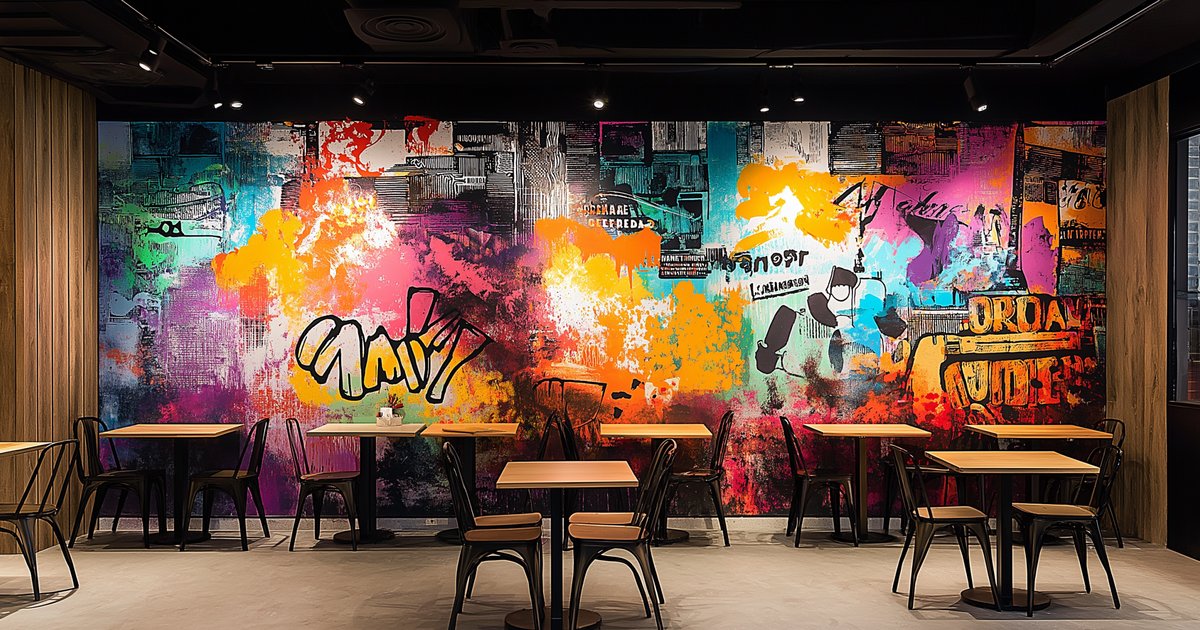
A commercial mural is not decoration - it is a visual infrastructure decision that changes how a space is perceived, how long people stay in it, and how likely they are to share it. Two muralists with verifiable portfolios - one in Mexico City, another in Querétaro - show through before-and-after photographs what happens when a blank wall becomes a communication piece.
Case 1: Santander Corporate Offices, Santa Fe
Monse Tello (@monse.t.arte) is a Mexico City-based muralist with 21 documented murals in her portfolio. One of them is located inside Santander's corporate offices at Prol. Paseo de la Reforma 500, Santa Fe district, under the project name "Risk Pro Santander."
The intervention transformed a flat, white, generic office wall into a piece that reinforces the Risk Pro team's identity. The difference between before and after speaks for itself.
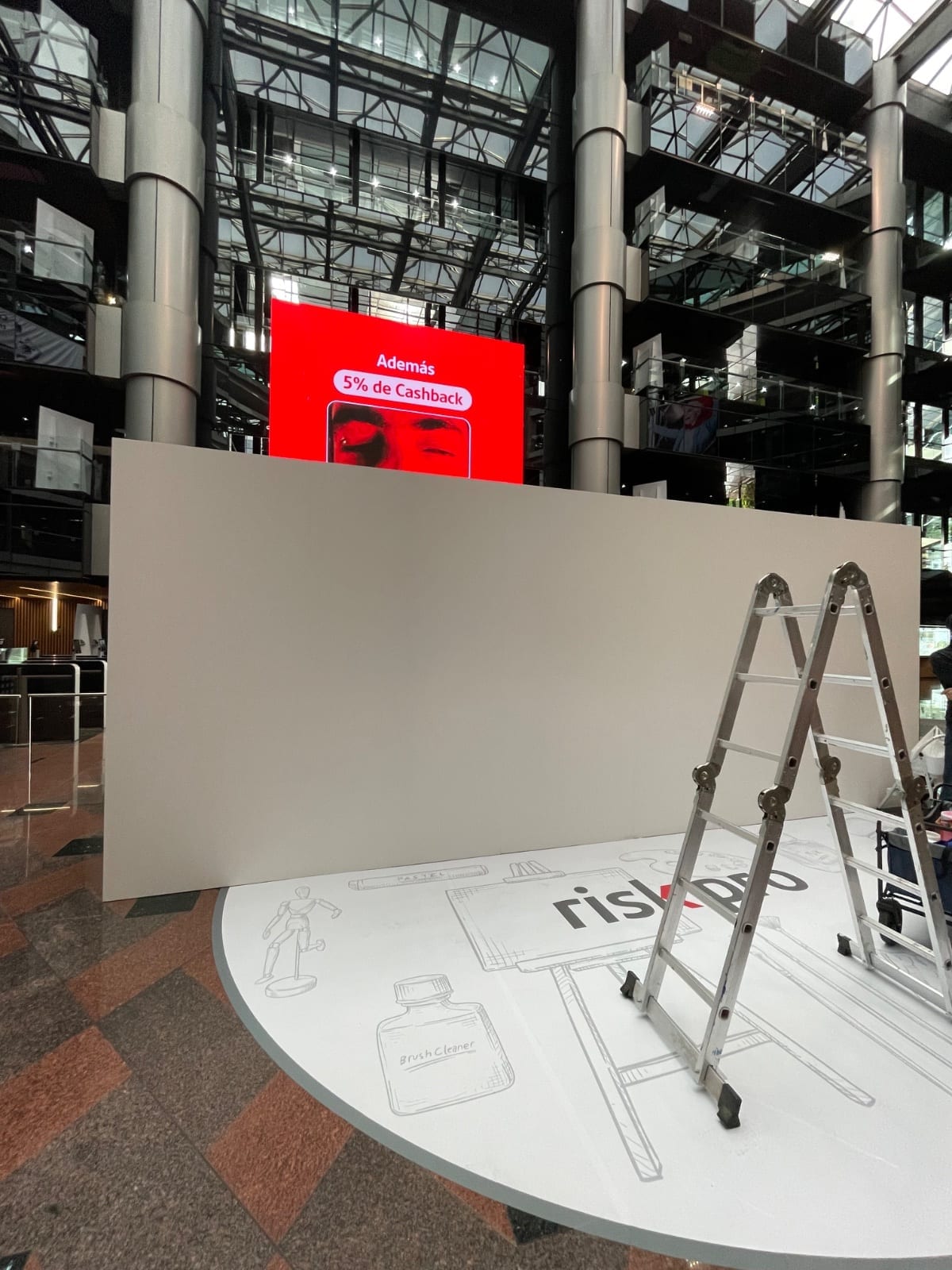
Before: generic wall in corporate office, Santander Santa Fe.
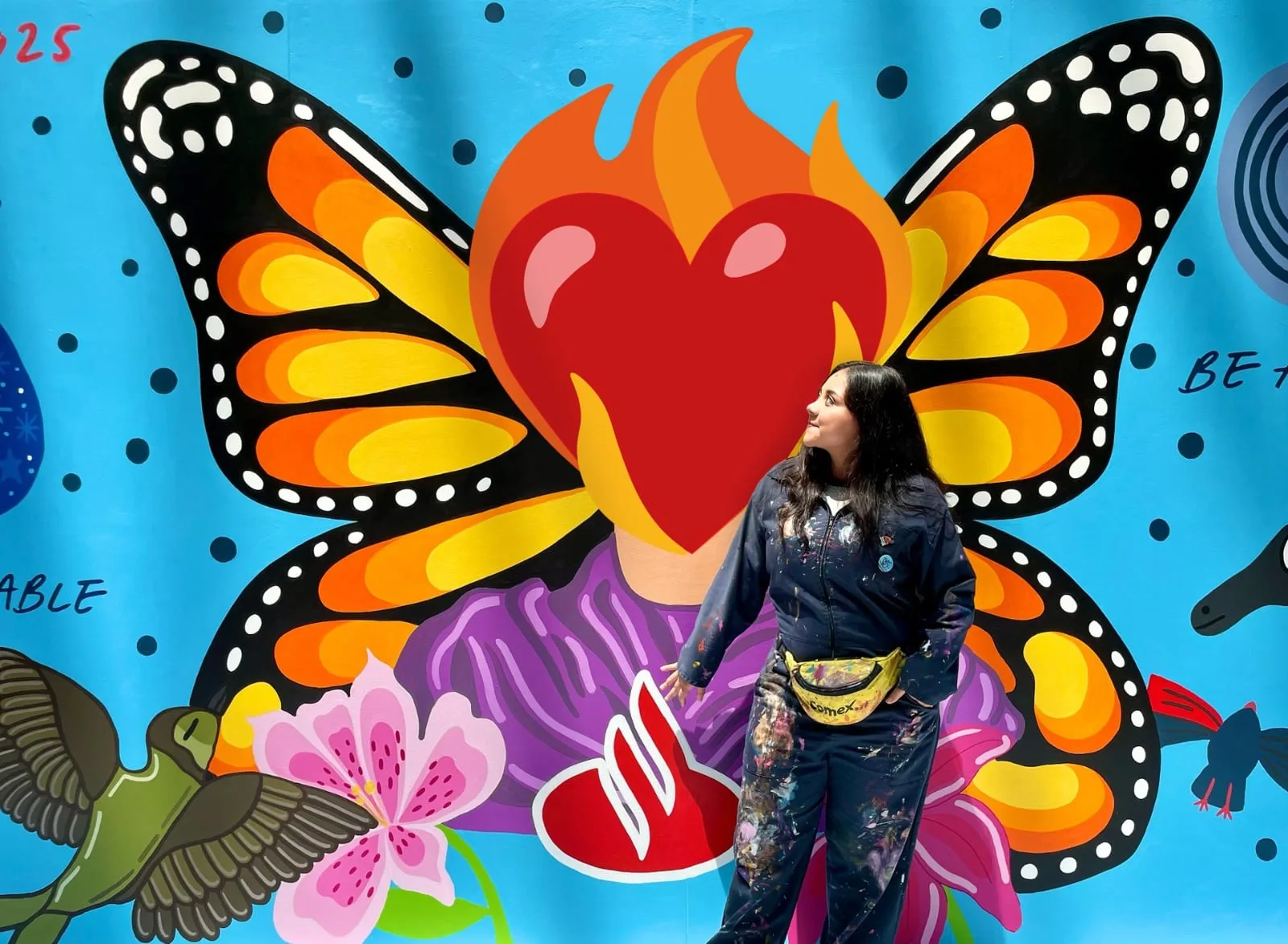
After: "Risk Pro Santander" mural by Monse Tello.
The same pattern appears in another Monse Tello project: "Estacionamiento CITI," located at Roberto Fulton 2, Tlalnepantla, for a Citibank industrial facility. A parking structure went from gray and impersonal to a visual landmark for employees and visitors.
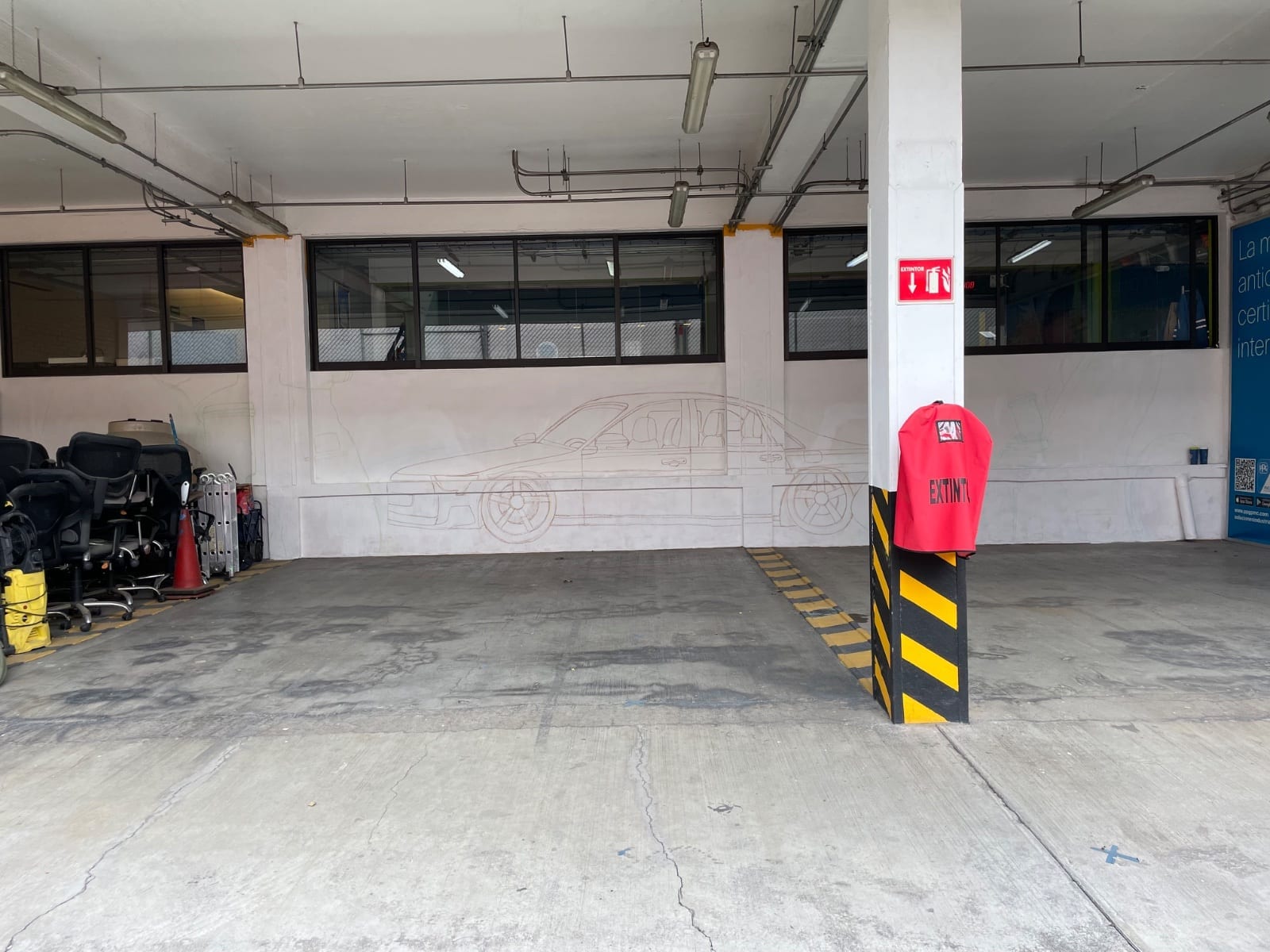
Before: industrial parking, CITI Tlalnepantla.
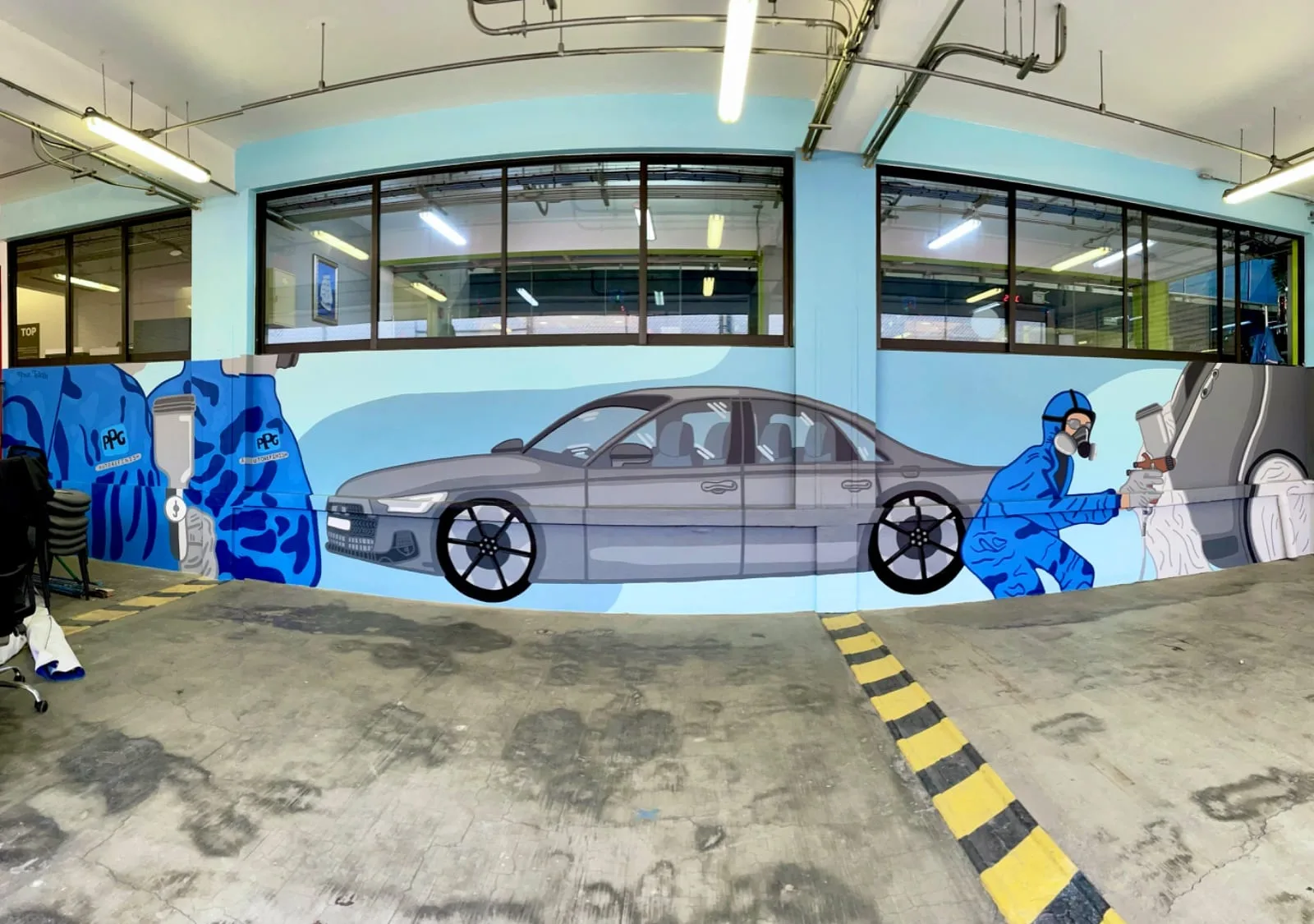
After: "Estacionamiento CITI" mural by Monse Tello.
Case 2: A Restaurant in Querétaro with Its Own Identity
Clara María Rodríguez / Maroga (@maroga_mx) works from Querétaro and has 20 murals in her portfolio. Her project "Bodegón rústico" is a direct example of how a commercial mural defines a restaurant's personality.
The venue had a blank wall in a high-traffic dining area. The intervention turned that dead space into the visual element that now identifies the place - a composition that engages with the gastronomy and rustic atmosphere without resorting to clichés.
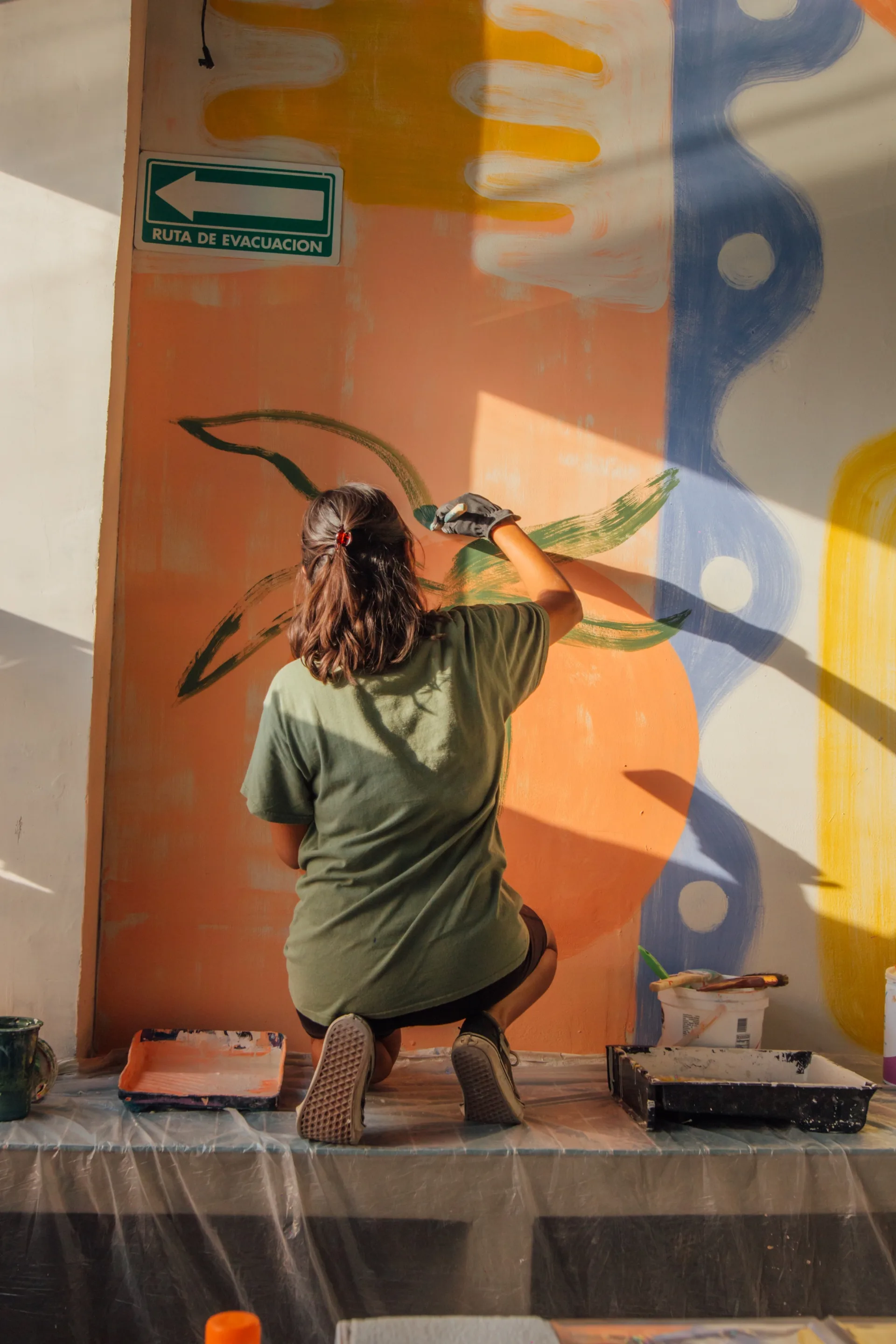
Before: unfinished wall in restaurant, Querétaro.
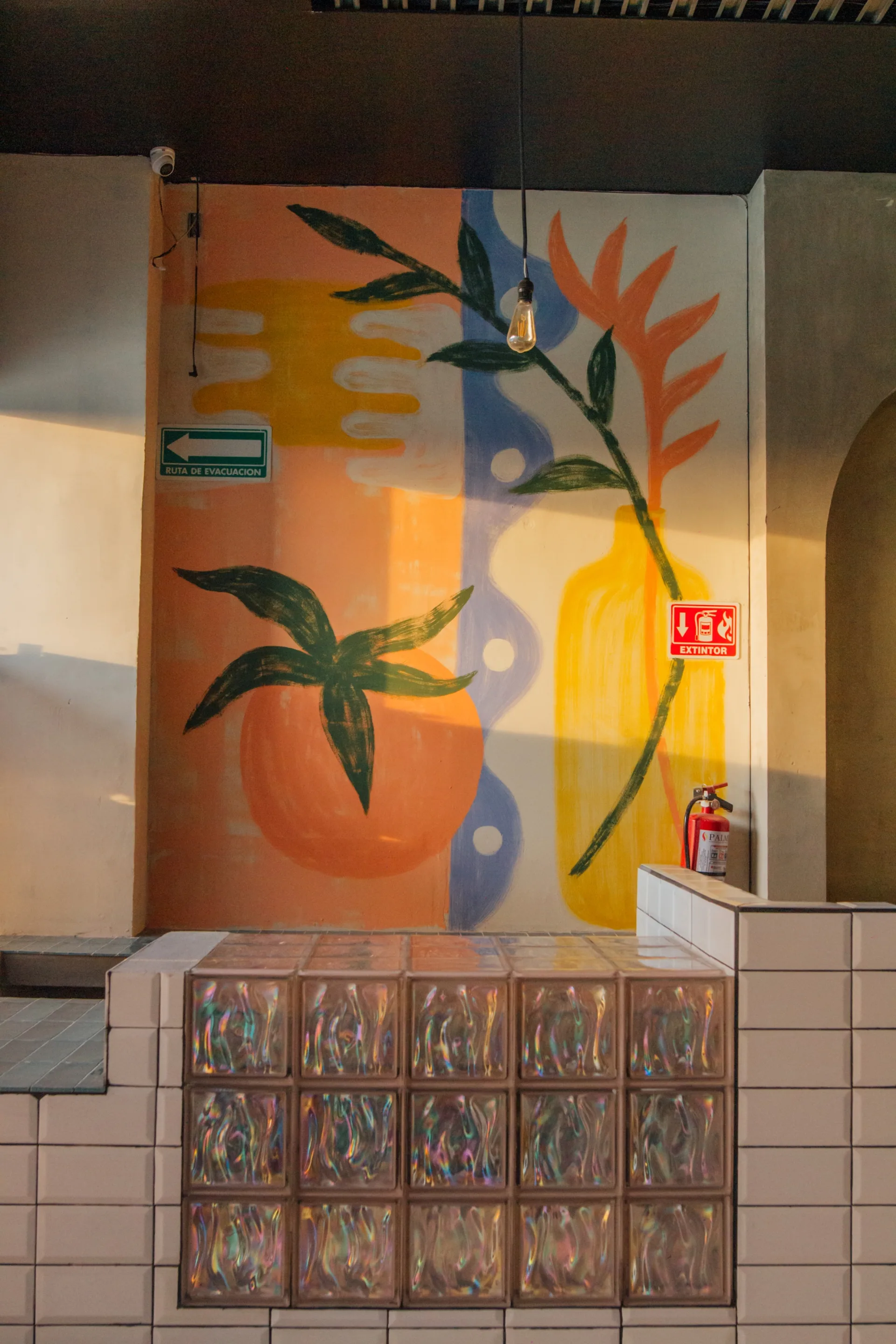
After: "Bodegón rústico" mural by Maroga.
"Working with Muralia was a very rewarding experience. The coordination with the construction was impeccable and the result exceeded the client's expectations."
Why It Works: The Evidence Behind Commercial Art
The evidence on art's impact in commercial spaces is not anecdotal. Research from the Urban Land Institute (ULI) has documented that properties with artistic interventions on their facades or interiors can generate rent premiums of up to 15% over comparable properties without them.
A study by Americans for the Arts found that public art increases dwell time in commercial areas, which correlates directly with higher spending per visit.
For interior murals - like those at Santander or the Querétaro restaurant - the effect operates differently: the art does not attract foot traffic from the street, but it does modify space perception, brand retention, and the likelihood that a visitor will share a photo on social media.
Four Lessons from These Projects
1. Context Defines the Design
A mural for a Santander corporate office has different requirements than one for a rustic restaurant in Querétaro. The project starts from the space, not the artist's style.
2. Before/After Is the Evidence
The photos taken before the intervention show what the mural replaces: generic walls that communicate nothing. The direct comparison is the most honest argument.
3. The Investment Has Measurable Returns
Rent premiums, longer dwell time, organic social media content: the return on a mural is tangible, though not always immediate. Institutions like ULI and Americans for the Arts document this.
4. A Verifiable Portfolio Matters
Both cases in this article are verifiable: artists with public profiles, real addresses, unfiltered photos. When hiring a muralist, requesting documentary evidence of prior work is an indispensable step.
Starting a Commercial Mural Project
If you are considering a mural for a commercial, office, or hospitality space, the first step is defining the brief: wall dimensions, how the space is used, brand visual identity, and approximate budget. Request a quote on Muralia to connect that brief directly with verified muralists who can propose tailored designs.