

What is Muralism? History, Techniques, and Global Relevance
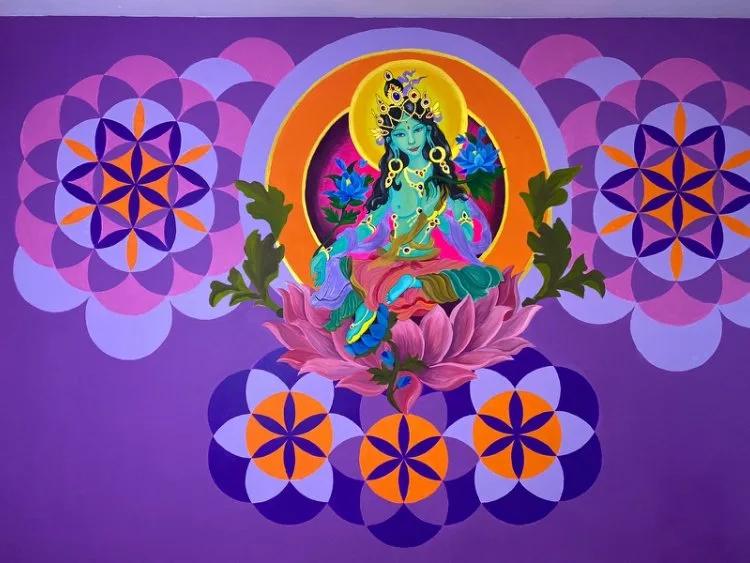
Muralism is one of the oldest forms of artistic expression in human history. From the cave paintings of Lascaux to contemporary urban art festivals, painting on walls has been an act of communication, identity, and social transformation. This article traces the complete history of muralism, its core techniques, and its relevance in today's world, where platforms like Muralia are professionalizing an industry that connects artists with spaces across 4 countries.
The Origins: The Wall as Humanity's First Canvas
Before paper, canvas, or digital screens existed, there was the wall. The earliest artistic manifestations of humanity were murals. The cave paintings of Altamira (Spain, circa 36,000 BCE) and Lascaux (France, circa 17,000 BCE) were not mere decorations: they were communication systems, hunting records, rituals, and cosmologies that a community needed to preserve.
In Ancient Egypt, murals reached a remarkable level of sophistication. The tombs of the Valley of the Kings feature compositions narrating the soul's journey to the afterlife, with mineral pigments that have survived over 3,000 years. The frescoes of Pompeii and Herculaneum, preserved by the eruption of Vesuvius in 79 CE, reveal how Romans used murals to simulate architecture, landscapes, and mythological scenes within their homes.
In Mesoamerica, the murals of Bonampak (Chiapas, Mexico, circa 790 CE) constitute one of the most complete pictorial records of Maya civilization. These compositions document battles, ceremonies, and court life with a detail that rivals any European mural tradition. In Asia, the Buddhist frescoes of the Ajanta Caves (India, 2nd century BCE - 5th century CE) and Dunhuang (China, 4th - 14th centuries CE) demonstrate that the muralist tradition is a truly global phenomenon.
Milestones in Ancient Muralism
Cave paintings using iron oxide and charcoal pigments. The earliest known murals in human history.
Funerary murals with mineral pigments on plaster. Narratives from the Book of the Dead.
Maya frescoes documenting ceremonies and battles. One of the most complete pre-Hispanic pictorial records.
Buddhist frescoes using tempera on rock. Narratives of the previous lives of the Buddha.
The Renaissance and the Golden Age of Fresco
The Italian Renaissance elevated muralism to a first-order artistic category. The buon fresco technique - painting on wet plaster so that pigments chemically bond with the wall - reached its highest expression with artists such as Giotto, Masaccio, Piero della Francesca, and, of course, Michelangelo.
The ceiling of the Sistine Chapel (1508-1512) remains, five centuries later, the universal benchmark of muralism. But reducing the Renaissance to Italy would be inaccurate. During the same period, the Ottomans decorated mosques with monumental calligraphy and geometric patterns that functioned as abstract murals. In Persia, the Safavid palaces of Isfahan featured figurative murals of a delicacy comparable to miniature painting.
What the Renaissance demonstrated was something that remains true today: a mural is not just art, but an act of power and communication. Popes commissioned frescoes to project theological authority. The Medici sponsored murals to consolidate their political legitimacy. The wall, as an artistic medium, has always been tied to the will to communicate something larger than the piece itself.
Mexican Muralism: Art as a Social Tool
After the Mexican Revolution (1910-1920), the government of José Vasconcelos, as Secretary of Public Education, commissioned a group of artists to create murals in public buildings with a clear objective: to educate a predominantly illiterate population and build a post-revolutionary national identity.
The three great figures of Mexican muralism - Diego Rivera, José Clemente Orozco, and David Alfaro Siqueiros - did not merely transform the art of their country; they redefined the social function of muralism worldwide.
Diego Rivera
Studied in Europe but returned to Mexico to create murals that narrated the history of the people. His works at the National Palace and the Detroit Institute of Arts demonstrate his international reach. His figurative, narrative style turned walls into visual history books.
José Clemente Orozco
The most expressionist of the three, Orozco painted the human condition with unprecedented emotional intensity. His murals at the Hospicio Cabañas in Guadalajara and at Dartmouth College (USA) explore suffering, war, and hope with a visual language that transcends borders.
David Alfaro Siqueiros
A technical innovator who experimented with dynamic perspectives, non-flat surfaces, and industrial materials such as pyroxylin. His Polyforum Cultural Siqueiros in Mexico City houses the largest mural painting in the world. He was the most experimental of the three in using new materials and supports.
The impact of Mexican muralism transcended national borders. In the United States, the Chicano movement adopted the mural as a tool of cultural resistance in the 1960s and 70s. In South America, artists like Oswaldo Guayasamín (Ecuador) and Cândido Portinari (Brazil) developed mural programs with similar social roots. The influence reached as far as Northern Ireland, where the political murals of Belfast became a visual chronicle of the conflict.
What the Mexican movement established was an idea that defines muralism to this day: the wall is a democratic space. Unlike a gallery or museum, a mural is in the street, accessible to everyone, and its message belongs to the community.
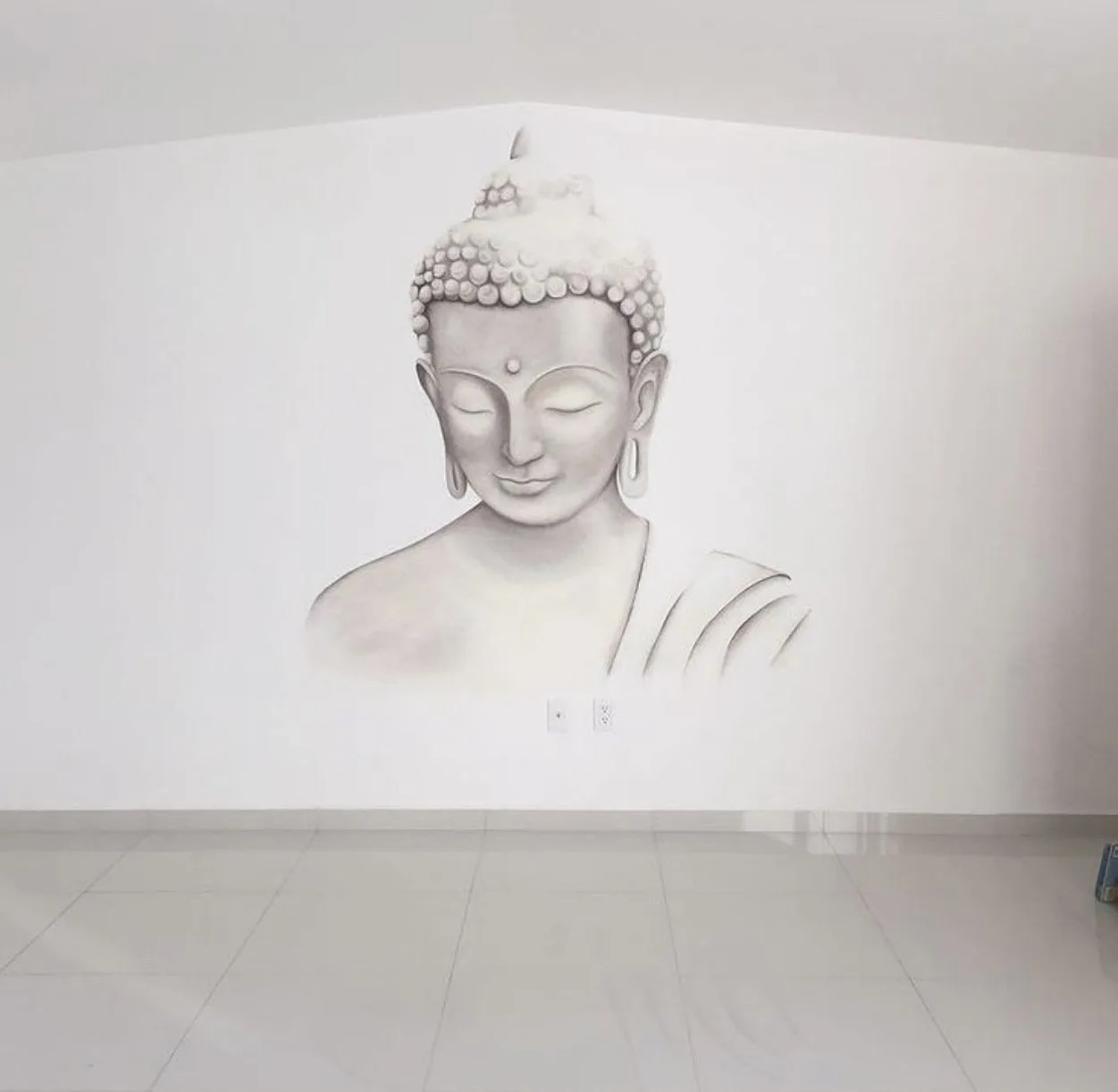
Contemporary commercial mural. Today's muralism combines art, brand identity, and space transformation. Muralist: robertabraun via Muralia.
Muralism Techniques: From Fresco to Spray
One of the least understood dimensions of muralism is the technical diversity it involves. It is not simply a matter of “painting a wall.” Each technique has distinct properties of durability, cost, execution time, and visual outcome.
Fresco (Buon Fresco)
Pigments applied on wet plaster. The color chemically bonds with the wall, creating exceptional durability. This is the technique of the Sistine Chapel and the Bonampak murals. Its drawback is that it demands speed - the artist must complete each section before the plaster dries - and requires advanced knowledge of chemistry and surface preparation.
Durability: Centuries | Cost: High | Difficulty: Advanced
Acrylic Paint
The most widely used technique in contemporary muralism. Acrylics offer color versatility, quick drying, and weather resistance when properly sealed. They allow corrections and layering, making them accessible to artists with varying levels of experience.
Durability: 10-15 years | Cost: Medium | Difficulty: Intermediate
Spray Paint (Aerosol)
Historically associated with graffiti, spray paint has become a top-tier professional tool. It enables smooth gradients, precise lines, and a speed of execution unmatched by any other technique. Artists like RONE (Australia) and Vhils (Portugal) have elevated spray to the category of contemporary art.
Durability: 5-10 years | Cost: Medium-Low | Difficulty: Intermediate-High
Mixed Media & Digital
21st-century muralism integrates digital projection, augmented reality, and materials such as mosaic, tile, and sculptural relief. Artists like Felipe Pantone combine digital geometry with physical intervention. Mural projections allow temporary experiences that transform buildings without altering their surfaces.
Durability: Variable | Cost: Variable | Difficulty: Specialized
Contemporary Muralism: Festivals, Cities, and Communities
Starting in the 2000s, muralism experienced a global renaissance driven by three factors: the professionalization of street art, social media as a platform for diffusion, and recognition by governments and businesses that murals generate economic and social value.
Today, cities across all five continents host muralism festivals that attract international artists, generate tourism, and revitalize entire neighborhoods.
POW! WOW!
Born in Hawaii in 2011, it has expanded to cities including Washington D.C., Long Beach, Taiwan, and Japan. It brings together artists from around the world to paint murals over the course of a week, combining art with music and community.
Wynwood Walls
Founded in 2009 by Tony Goldman in Miami, it transformed an industrial district into one of the most visited urban art destinations in the world. It proved that murals can be a driver of urban regeneration and real estate appreciation.
All City Canvas
A Mexican festival founded in 2012 that has brought international artists like Herakut, Roa, and Aryz to paint in Mexico City. It has been key in positioning the Mexican capital as a global benchmark for contemporary muralism.
Other notable festivals include Mural Festival (Montreal), CALLE Libre (Vienna), Nuart (Stavanger, Norway), Jidar (Rabat, Morocco), and Bloop Festival (Ibiza). The list grows every year, confirming that muralism is not a niche: it is a global cultural movement with measurable economic impact.
A study by Americans for the Arts estimated that public art activities generate a return of between 7 and 12 dollars for every dollar invested, considering tourism, local employment, and property appreciation. In Wynwood, the value per square meter multiplied tenfold in the decade following the installation of the first murals.
“The wall is the most democratic medium there is. You don't need a museum ticket or a gallery invitation. The mural finds you.
Commercial Muralism: Art with a Business Purpose
One of the most significant evolutions of muralism over the past two decades is its integration into the commercial world. Restaurants, hotels, corporate offices, shopping centers, and real estate developments increasingly turn to murals as part of their identity and marketing strategy.
This phenomenon is not accidental. Research in neuromarketing and consumer behavior suggests that visually stimulating environments increase dwell time, spending willingness, and the likelihood of generating social media content. A photogenic mural on a restaurant's facade is, in practice, a permanent marketing campaign.
However, the commercial muralism market has operated for years in an informal manner: without standardized contracts, without verifiable portfolios, without protected payment mechanisms. It is precisely this gap that platforms like Muralia aim to fill.
Professionalizing Muralism: The Role of Muralia
Muralia operates as a global marketplace connecting professional muralists with clients looking to transform their spaces. The platform addresses the three structural problems of the traditional market: discovery (finding the right artist), trust (verifying portfolios and experience), and transaction (protected payments and clear contracts).
Artists from 4 countries with verified portfolios. Clients access talent that was previously invisible or inaccessible outside local circuits.
The client sets their budget and receives quotes from multiple artists. The process eliminates the opacity that has characterized the market for decades.
Artists present visual mockups before starting the project. The client approves the final design, reducing the risk of dissatisfaction.
An advance and final payment system that protects both parties. The artist gets paid for their work; the client pays for verified results.
The Future of Muralism
Muralism is experiencing an unprecedented moment of expansion. The combination of accelerated urbanization, the search for local identity in the face of globalization, and the demand for authentic experiences from consumers and tourists creates a favorable context for mural art to continue growing.
Trends that will define the next decade include the integration of technology (augmented reality over physical murals, interactive murals with sensors), sustainability (paints with air-purifying properties, such as Airlite technology), and the professionalization of the industry through digital platforms that standardize contracts, payments, and creative processes.
What will not change is the essence of muralism: the human need to tell stories on the walls that surround us. From the caves of Lascaux to the skyscrapers of Tokyo, Berlin, or Mexico City, the impulse is the same. What has changed are the tools, the scale, and - thanks to platforms like Muralia - the access.
Start Your Mural Project
Whether you are looking for a mural for your business, your community, or your home, Muralia connects you with verified professional artists in 4 countries. Set your budget, receive quotes, and approve the design before work begins.
Explore Muralia