

What is Realism in Murals? Styles, Techniques, and Artists
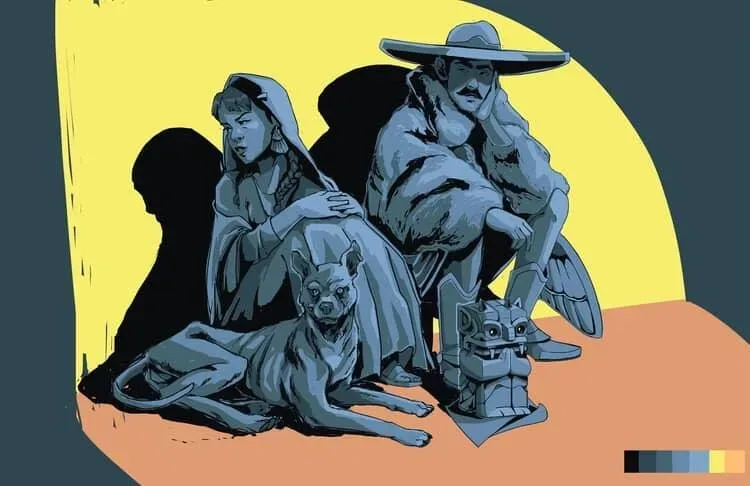
Realism in murals is one of the artistic traditions with the greatest historical and visual weight worldwide. From Diego Rivera's murals to the hyperrealistic facades transforming entire cities, this style remains one of the most requested by clients seeking impact, narrative, and permanence in their projects. This article explores the history, techniques, and applications of mural realism in the contemporary context.
A Brief History of Realism in Mural Art
Realism as an artistic movement was born in France in the mid-19th century, as a reaction to romanticism and the idealization of reality. Artists like Gustave Courbet advocated for the faithful representation of everyday life, without embellishing or distorting what they saw. That philosophy soon migrated to walls.
In Latin America, mural realism reached its most powerful expression with the Mexican muralism movement of the 1920s and 1930s. Diego Rivera, David Alfaro Siqueiros, and Jose Clemente Orozco used realism - often blended with allegorical elements - to narrate a country's history on its public buildings. Rivera, in particular, mastered anatomical and architectural representation with a precision that remains a technical reference for contemporary muralists around the world.
Today, mural realism has evolved. It is no longer limited to political or social narrative. We find realistic murals on commercial facades in Bogota, private residences in Miami, restaurants in Barcelona, and corporate spaces in Mexico City. The technique has gone global, but the premise remains the same: representing reality with fidelity and craft.
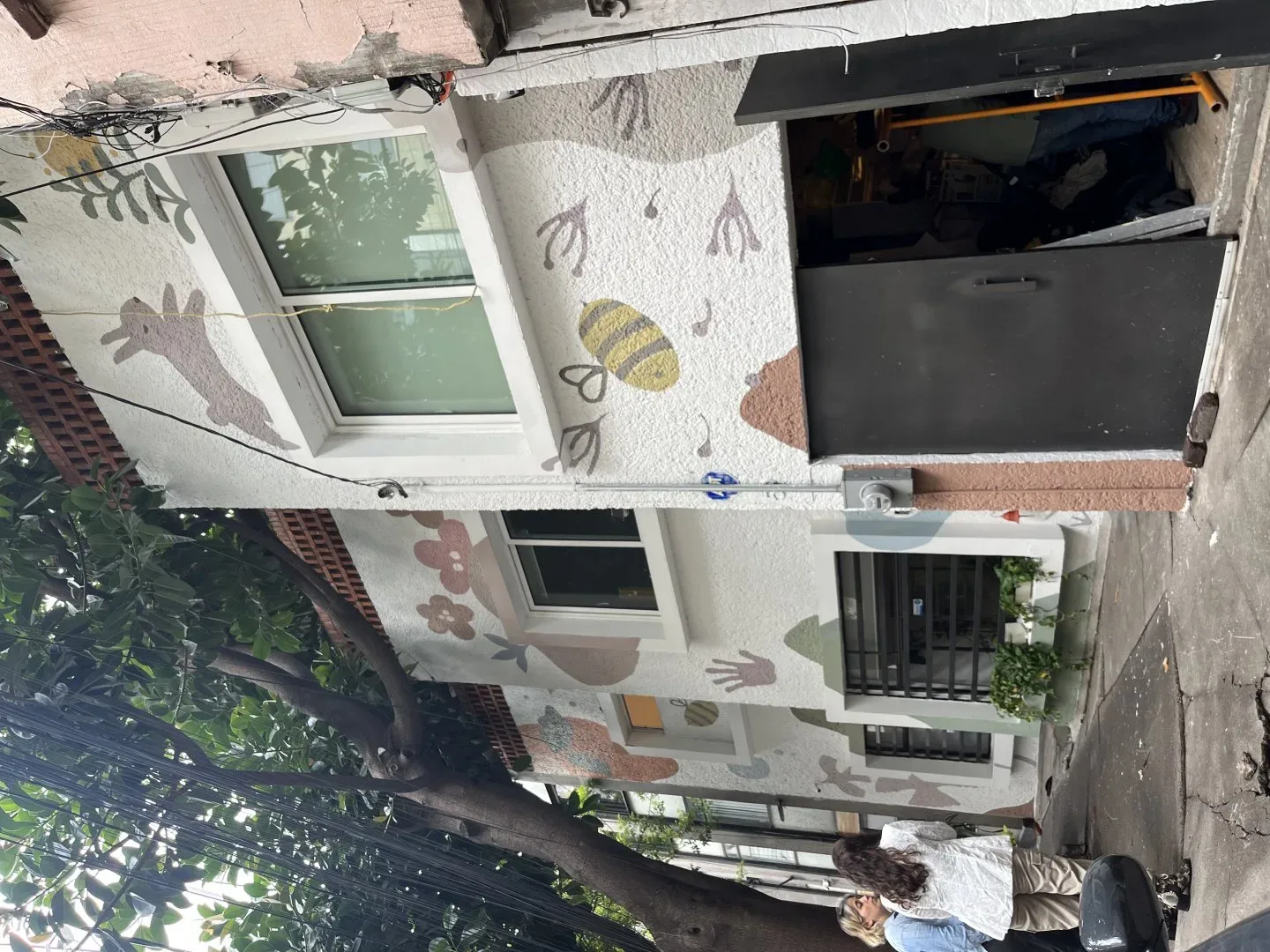
An example of how realism is applied in contemporary commercial contexts. Muralist: robertabraun
Key Techniques of Realism in Murals
The term “realism” encompasses a broad spectrum of techniques. Not all pursue the same goal, and understanding the differences is fundamental when defining a mural project.
Trompe l'oeil
Literally “deceives the eye.” This technique creates the optical illusion of depth, volume, or three-dimensional spaces on a flat surface. A wall can appear to be an open window, a garden, or an architectural extension of the building. It is common on historic facades in Europe and in high-end interior design projects.
Hyperrealism
It goes beyond photography. A hyperrealistic mural reproduces details the human eye barely perceives: skin textures, reflections on water, the transparency of glass. It demands notable technical mastery and longer execution times, but the result is visually striking.
Photorealism
Based on reference photographs, photorealism seeks to replicate an image with the greatest possible accuracy. It is common in portraits, urban landscapes, and brand murals that need to reproduce products or recognizable faces with precision.
Photorealism vs. Stylized Realism
One of the most frequent questions we receive at Muralia is: “I want something realistic, but I don't want it to look like a photo stuck on a wall.” This distinction is important and worth exploring in depth.
Photorealism pursues maximum fidelity to the original image. Every shadow, every pore, every reflection is reproduced just as it would appear in a high-resolution photograph. It is the right choice when precision is the priority: corporate portraits, brand products, or flora and fauna that require exact identification.
Stylized realism, on the other hand, maintains recognizable proportions and forms but incorporates artistic freedoms. A portrait may have correct features but with a more expressive color treatment, or a landscape may faithfully represent a mountain but with visible brushstrokes that add texture and character. This approach tends to work when the client wants realism with personality - something that reads as a mural, not as a digital print.
Both approaches are valid and neither is inherently superior to the other. The choice depends on context, the mural's scale, viewing distance, and the communicative intent of the project.
When to Choose Realism for Your Project
Realism is not for every project, and that is perfectly fine. But there are contexts where it is the most effective option:
- Portraits and human figures: When the mural depicts a real person - a founder, a historical figure, a community leader - realism ensures the result is recognizable and respectful of the subject.
- Brand imagery and products: Restaurants wanting to showcase their dishes, companies needing to reproduce their product in large format, or brands seeking advertising murals with high visual recognition.
- Landscapes and nature scenes: Murals in spas, hotels, clinics, or residences where the goal is to create an atmosphere of serenity through realistic landscapes - mountains, forests, coastlines, gardens.
- Architectural trompe l'oeil: When the goal is to visually expand a space, create false windows, fictional urban landscapes, or illusory extensions of the existing architecture.
- Historical or cultural narrative: Community projects, educational institutions, or public spaces that need to tell a story with visual clarity, where the viewer can identify characters, places, and events without ambiguity.
““Realism in a mural is not just technical skill. It is the ability to make passersby stop because what they see feels familiar, human, true.”
Notable Muralists of Realism
Mural realism has notable exponents across different eras and geographies. Knowing some key figures helps understand the range of possibilities:
Historical and Contemporary References
Diego Rivera (Mexico, 1886-1957)
Father of Mexican muralism. His murals at the National Palace and the Palace of Fine Arts combine figurative realism with social allegory. The anatomy, textiles, and landscapes in his works remain a technical reference for muralists worldwide.
John Pugh (United States)
A global reference for architectural trompe l'oeil. His murals in California create the illusion of crumbling buildings, open doors, and spaces that do not exist, with a level of detail that confuses the eye even up close.
ODEITH (Portugal)
Known for his three-dimensional anamorphoses - murals that appear to float off the wall when viewed from the correct angle. His work combines hyperrealism with forced perspective, and he has painted in over 20 countries.
Adnate (Australia)
A specialist in large-format hyperrealistic portraits, frequently using spray paint. His murals in Melbourne, Los Angeles, and cities across Asia depict human faces with an emotional depth that transcends technique.
Maintenance Considerations for Realistic Murals
One aspect few clients consider at the start of a project is maintenance. Realistic murals, due to their level of detail, present specific considerations that should be planned from the beginning.
The good news is that a well-executed realistic mural, painted with professional materials, can last between 7 and 15 years outdoors - and significantly longer indoors - with minimal maintenance.
Deterioration Factors
- -UV exposure: Direct sunlight fades pigments, especially reds and yellows. UV-resistant sealants significantly extend the mural's lifespan.
- -Moisture: In tropical or coastal climates, humidity can cause mold growth beneath the paint. A waterproofing base coat is essential.
- -Pollution: In cities with heavy vehicle traffic, soot particles settle on the surface and dull the details.
Recommendations
- -Final sealant: Apply a matte or satin UV-resistant varnish coat upon completing the mural. Reapply every 2 to 3 years for outdoor murals.
- -Periodic cleaning: A gentle wash with water and mild soap every 6 months keeps details visible and prevents dirt buildup.
- -Scheduled touch-ups: When hiring a muralist through Muralia, you can arrange an annual touch-up as part of the service. This is especially useful for hyperrealistic murals where a lost detail alters the overall perception.
How Muralia Connects Your Project with the Right Artist
At Muralia, we work with over 250 verified muralists in Mexico, Brazil, Guatemala, and Spain. Many of them specialize in different branches of realism - from photorealistic portraits to architectural trompe l'oeil.
The process is straightforward: you describe your project, indicate the style you are looking for and your budget, and our system connects your request with artists who have proven experience in that type of work. You can compare portfolios, review previous projects, and receive personalized quotes with no commitment.
If you are not sure what type of realism you need - photorealism, stylized, trompe l'oeil - our team can guide you through the project creation process. The platform is designed so that both experienced clients and first-time mural commissioners find the right artist.
Start Your Realistic Mural Project
Whether it is a large-format portrait, an immersive landscape, or a trompe l'oeil that transforms your facade, at Muralia you will find muralists with the technical expertise to bring it to life. Describe your idea and receive proposals from artists specialized in realism.
Request Quotes