

What is Street Art? Origins, Styles, and its Global Evolution
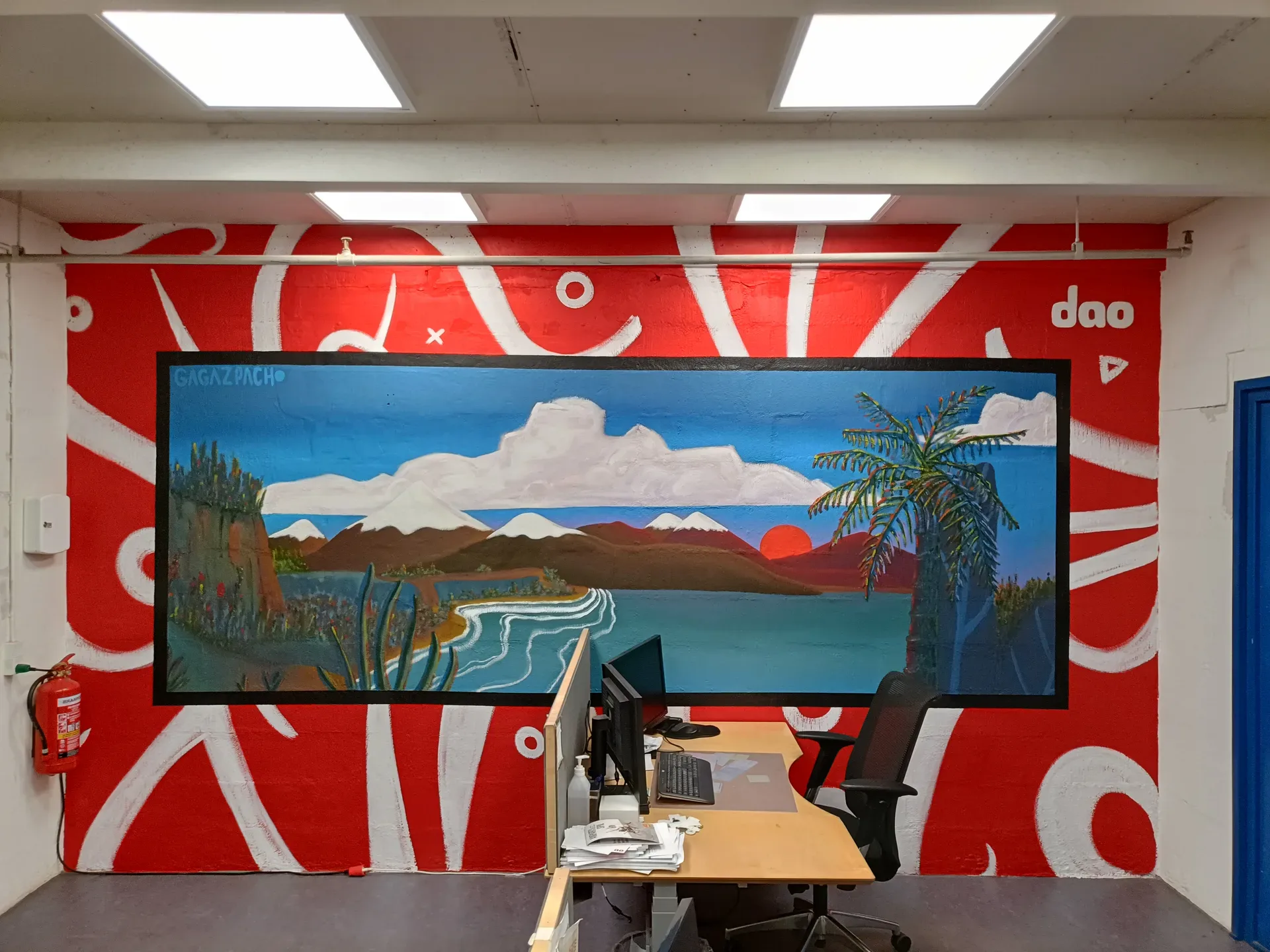
Street art has traveled a long road from the first tags on New York subway cars to becoming one of the most influential artistic expressions of the twenty-first century. What began as an act of rebellion on the margins of the city now occupies galleries, corporate facades, and international festivals. This article traces that evolution: its origins, its styles, its global capitals, and the ongoing debate about its commercialization.
Origins: From New York Subway Cars to the World
The history of street art is tied to the birth of modern graffiti in New York City during the 1970s. Writers like TAKI 183 and CORNBREAD began leaving their signatures - or tags - on walls and subway trains, creating a visual language that challenged the idea of who has the right to intervene in public space. By the end of that decade, graffiti had become a cultural phenomenon inseparable from hip-hop, breakdancing, and DJing.
In the 1980s, artists like Jean-Michel Basquiat and Keith Haring brought that street energy into the galleries of contemporary art. Basquiat, who had started signing as SAMO on the streets of Lower Manhattan, exhibited alongside Andy Warhol and ended up redefining what the art world considered legitimate. Haring, for his part, filled subway stations with simple yet powerful figures that communicated social messages without the need for words.
This crossover between the street and the gallery laid the groundwork for everything that would follow: the idea that urban art was not vandalism but a valid form of cultural expression with deep roots in marginalized communities.

Graffiti on New York's subway system during the seventies and eighties was the starting point of a movement that would redefine public art on a global scale.
The Banksy Era and Global Legitimization
If the seventies and eighties belonged to New York, the nineties and two-thousands were the moment street art went global. And no figure embodies that transition like Banksy. From Bristol, England, the anonymous artist used stencils - cut-out templates that allow images to be reproduced quickly - to create pieces that combined humor, political critique, and an accessible aesthetic. His works appeared on walls in London, Palestine, New York, and Melbourne, generating headlines in media outlets that had previously ignored street art.
Banksy did not invent the stencil nor was he the first street artist to achieve fame, but he was the one who demonstrated that a piece on a wall could generate the same media impact as a museum exhibition. His work Girl with Balloon, which partially self-destructed during an auction at Sotheby's in 2018, later sold for over 25 million dollars - a moment that crystallized the tension between street art's rebellious origins and its growing market value.
In parallel, artists like Shepard Fairey (creator of the iconic Obama HOPE poster), Invader (known for his pixelated mosaics in cities worldwide), and JR (whose large-scale photographic installations have appeared in favelas, borders, and prisons) expanded the definition of what street art could be and whom it could speak to.
Major Styles of Street Art
Urban art is not a single style but an ecosystem of techniques that have evolved over five decades. Each one has its own history, its tools, and its relationship with public space.
Graffiti and Lettering
The root of the movement. Tags, throw-ups, and elaborate pieces that explore typography as art. From the quick signatures of the seventies to contemporary wildstyles, lettering remains the backbone of street art.
Stencil
Popularized by Banksy and Blek le Rat, stencils allow complex images to be reproduced quickly. Their ability to combine text and imagery made them the preferred tool for urban art with a political or social message.
Wheat-paste and Collage
Printed or painted images on paper adhered to walls with paste. JR and Swoon are key figures of this technique, which allows artists to work in the studio and then install on the street, scaling up without depending on extended permits.
Large-Scale Murals
Pieces that cover entire buildings, usually commissioned by governments, festivals, or companies. Artists like OSGEMEOS, Kobra, and ROA have brought this technique to facades over twenty stories tall in cities across all five continents.
Installations and 3D
Street art that transcends paint. From Invader's mosaics to Bordalo II's urban sculptures (made from recycled trash), these interventions challenge two-dimensionality and transform everyday objects into public art.
Digital Art and Projections
The newest frontier of street art. Projections on buildings, augmented reality activated via smartphone, and interactive murals that change with the time of day. Technology expands the possibilities without replacing the analog.
Global Capitals of Street Art
While urban art exists in virtually every city in the world, there are places where the concentration of talent, cultural infrastructure, and public policy have created particularly fertile ecosystems. These are some of the globally recognized capitals of street art.
- 1New York City, USA: The birthplace of modern graffiti. Bushwick Collective in Brooklyn has become an open-air gallery with constantly rotating pieces. The legacy of Basquiat and Haring remains present on every corner.
- 2London, United Kingdom: Shoreditch and Brick Lane are epicenters of a movement that ranges from political stencils to brand-commissioned murals. Banksy's city remains an active laboratory for urban art.
- 3Berlin, Germany: The fall of the Wall in 1989 left kilometers of available surface. The East Side Gallery - the longest remaining stretch of the Wall - was painted by over one hundred artists from around the world and is today one of the most visited street art monuments on the planet.
- 4São Paulo, Brazil: Avenida Paulista and the Vila Madalena neighborhood house some of the most ambitious interventions in the Southern Hemisphere. Artists like OSGEMEOS and Kobra have turned entire buildings into canvases that define the city's visual identity.
- 5Melbourne, Australia: Hosier Lane is arguably the most photographed alley in the street art world. The city has an explicit policy of protecting urban art in designated zones, creating an ecosystem where the legal and the spontaneous coexist.
- 6Mexico City, Mexico: From Diego Rivera's murals to the contemporary movement in neighborhoods like Roma, Juárez, and Tepito, CDMX has a muralist tradition that connects the twentieth century to the twenty-first. Festivals like All City Canvas have positioned the city as a Latin American benchmark for commissioned urban art.
Festivals that Define the Scene
Street art festivals have been instrumental in professionalizing the movement. They function as meeting points between artists, curators, local governments, and brands, and they usually leave a permanent legacy of murals in their host cities.
POW! WOW!
Born in Hawaii in 2010, it has expanded to over fifteen cities across Asia, Europe, and the Americas. Each edition brings together international artists who paint large-scale murals over the course of a week, alongside live music and public workshops.
Wynwood Walls
Since 2009, entrepreneur Tony Goldman transformed a former warehouse district in Miami into one of the most recognized open-air collections of urban art in the world. Wynwood proved that street art can drive urban regeneration and economic development.
All City Canvas
Founded in Mexico City, this festival has brought artists like Herakut, Roa, and Saner to paint buildings in iconic areas of the capital. It has been key to positioning CDMX within the global circuit of commissioned urban art.

Large-scale murals have transformed entire districts, turning gray facades into canvases that attract tourism, investment, and media attention.
The Debate: Vandalism, Commercialization, and Authenticity
The tension between street art's countercultural origins and its integration into the mainstream is not new, but it has intensified over the past decade. Some argue that urban art loses its essence when it is commissioned, paid for, and framed within marketing strategies. Others contend that professionalization is the only path for artists to make a living from their work without depending on the informal economy.
This tension does not have a simple resolution. What is observable, however, is that cities that have found a balance - Melbourne with its designated zones, Berlin with its tradition of tolerance, Mexico City with its muralist heritage - tend to produce richer and more diverse scenes than those that criminalize all intervention or reduce it to a tourist product.
Illegal graffiti continues to exist and will continue to exist. But alongside it, a legitimate market for urban art has grown that includes private commissions, corporate interventions, government-funded festivals, and digital platforms that connect artists with clients. The question is no longer whether street art should be commercialized, but how to do it without erasing the voices that gave it life.
Professionalization as Opportunity
Platforms like Muralia operate in this middle ground: they do not replace the spontaneity of street art, but they do provide infrastructure for artists who want to work on commission to do so professionally. Verified portfolios, transparent quotes, clear contracts, and protected payments are tools that did not exist a decade ago and that today allow a muralist in Mexico City to receive a project from a client in Berlin or São Paulo.
From the Street to the Platform: The Future of Urban Art
Street art in 2026 is a broad field that spans from the anonymous tag in an alley to the ten-story mural commissioned by a municipal government. That breadth is, in part, what makes it relevant: there is no single way to participate and no single audience it addresses.
What has changed is the infrastructure around the movement. Twenty years ago, a talented muralist in Guadalajara or Buenos Aires had few options for connecting with clients outside their local network. Today, digital platforms, social media, and international festivals have created a global circuit where talent can circulate more freely.
Muralia is part of that infrastructure. Not as a curator or a judge of what is or is not legitimate urban art, but as a tool that facilitates the connection between artists and those looking to transform their spaces. Because in the end, street art has always been that: a conversation between the one who creates and the one who observes. What changes are the means for that conversation to happen.
Global Reach
Street art has gone from being a local phenomenon to a movement present on all five continents. Artists travel, styles blend, and cultural references intersect in ways that would have been unthinkable three decades ago.
Democratized Access
Digital platforms have lowered barriers to entry for both artists and clients. A business in any city in the world can access international talent without traditional intermediaries.
Permanent Visibility
Unlike other art forms, a mural works twenty-four hours a day. It is visible to pedestrians, drivers, and social media users who share it, generating continuous impact at no additional cost.
Diversity of Styles
From classic graffiti to digital projections, the range of available techniques allows each project to find the right style for its context, audience, and budget.